温暖生活油画棒绘本插画
来源: @ai_suxiaole模型: ChatGPT
📸 示例图片
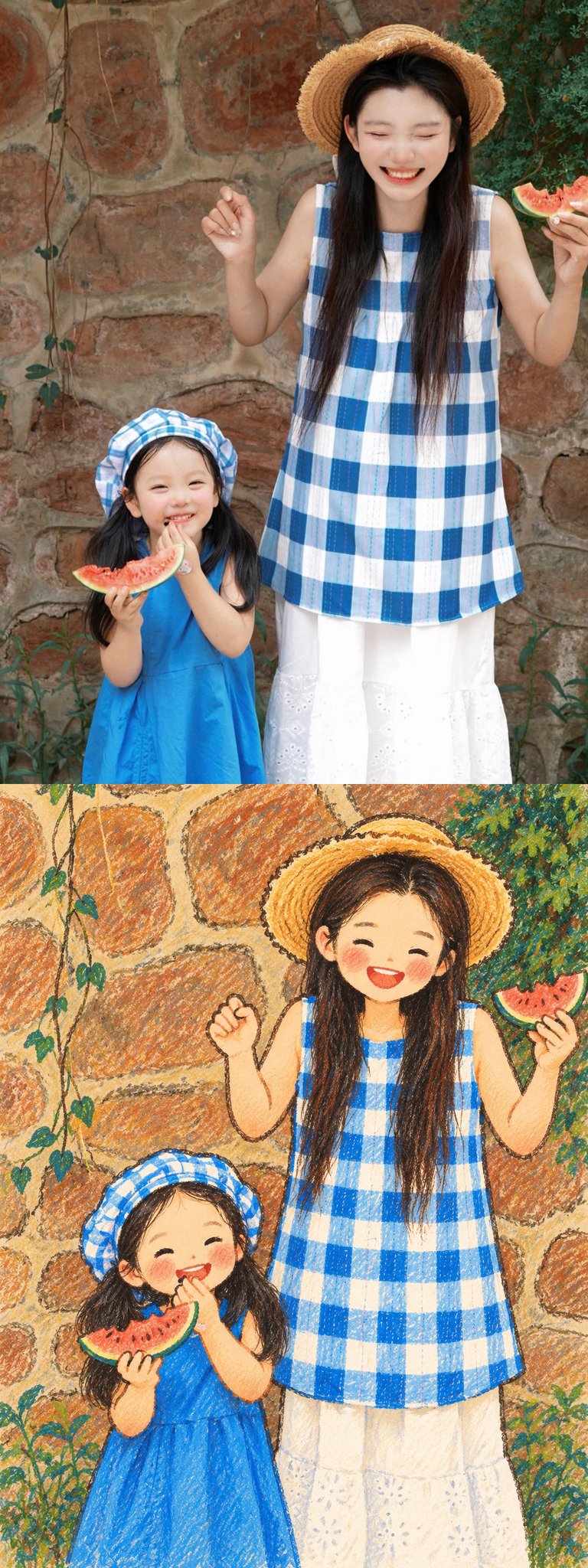
提示词
English
Redraw the uploaded image as a warm, charming everyday-life picture-book illustration, using coarse oil-pastel and wax-crayon marks with colored-pencil accents. The uploaded image is the sole source of people, objects, actions, and scenery. Transform the shapes, contours, color masses, and mark-making into a coherent illustration; simply adding paper texture or grain to the photograph is insufficient.

OVERALL STYLE
Make the image look drawn directly on warm ivory paper. Combine soft, substantial color shapes, rough dark outlines, and clearly visible crayon strokes. Aim for an affectionate, unpolished handmade quality, with slightly imperfect drawing and the feeling of an ordinary moment recorded in a family picture book.

LINEWORK AND MATERIAL
Outline people and major objects with grainy charcoal-black or dark-brown strokes. Let contours wobble slightly, vary naturally in thickness, and show broken edges, rough deposits, and small gaps of exposed paper. Keep interior lines lighter and fewer.
Build color through short strokes, diagonal scribbles, back-and-forth rubbing, and uneven overlapping layers. Paper grain should remain visible through both outlines and filled areas. Even dark masses should contain tiny lighter gaps. Texture must follow the drawing strokes rather than appear as uniform digital noise. Allow occasional slight overshoot and incompletely filled edges while keeping the main shapes clear.

CHARACTER DESIGN
Clearly cartoonize the people: moderately enlarged heads, rounded faces, full cheeks, simplified chins, and soft, compact body and limb shapes. Preserve the rounded proportions of young children while keeping adults visibly distinct in age and body structure.
Retain each person's visible hairstyle silhouette, hair color, approximate face shape, eyewear, distinctive accessories, and general build. Do not give everyone the same face.
Draw eyes as small solid-black dots or short ovals. Use simple short strokes for eyebrows, a tiny dot or minimal mark for the nose, and a small curve or uncomplicated open shape for the mouth, preserving the source expression. Add soft peach-pink blush to the cheeks where appropriate. Avoid realistic eyeballs, irises, eyelashes, large sparkling eyes, and detailed facial anatomy.
Consolidate hair into substantial overall shapes with rough color coverage and a few directional strokes, without rendering individual strands. Simplify hands and feet into rounded forms while maintaining clear grasping, contact, and support relationships.

COLOR AND LIGHT
Establish a warm base of cream, ivory, peach skin tones, and soft browns while retaining the source image's main object colors. Use natural crayon yellows, greens, blues, and reds rather than fluorescent colors or a uniform faded filter.
Express most volume through color shapes, contours, and overlap. Suggest shadows sparingly with darker strokes from the same color family or muted gray-brown patches. Replace photographic shading, glossy reflections, and complex gradients with simple drawn color relationships. Preserve the visual weight of dark hair, dark clothing, and strong outlines.

CLOTHING, OBJECTS, AND ENVIRONMENT
Preserve clothing categories, main colors, recognizable patterns, accessories, and important props from the source. Translate folds, patterns, and object structures into a limited number of drawn lines and color patches rather than intricate material detail.
Redraw the entire background in the same handmade visual language. Preserve the positions, major shapes, and spatial relationships of furniture, buildings, trees, roads, and other scene elements. Simplify detail while retaining enough everyday information for the original setting to remain recognizable.
Keep facial features extremely simple, clothing and props selectively descriptive, and environmental marks richer but still broadly drawn. The background must not retain photographic texture or automatically become blank white or a solid color.

COMPOSITION AND CONTENT
Preserve the source aspect ratio, viewpoint, shot size, main subject placement, number of people, actions, gaze directions, and overlap relationships. Apply the same illustration style to every person in a group photograph.
Allow local proportion changes for cartoon design while preserving the meaning of the scene. Do not expand the canvas or invent body parts and objects outside the original frame.
The style controls how the source is drawn. Do not introduce babies, food, phones, festive decorations, or any other content absent from the uploaded image. Simplify existing text and signage according to their visual importance. Add no new text, watermark, or signature.

AVOID
Photo tracing; a photograph with a texture overlay; realistic portraiture; smooth vector art; mechanically uniform outlines; transparent watercolor washes; detailed graphite drawing; large anime eyes; sparkling eyes; plastic surfaces; 3D rendering; complex photographic lighting; finely rendered hair or skin; random grime; excessive blur; and inconsistent styles between characters and backgrounds.

Output exactly one finished illustration, with no collage, comparison panel, or explanatory text.
中文
将上传的图片重绘为一幅温暖、迷人的日常生活绘本插画,使用粗糙的油画棒和蜡笔痕迹,并辅以彩色铅笔的点缀。上传的图片是人物、物体、动作和风景的唯一来源。将形状、轮廓、色块和笔触转化为连贯的插画;仅在照片上添加纸张纹理或颗粒感是不够的。

整体风格
让图像看起来像是直接画在温暖的象牙色纸上的。结合柔和、厚实的色彩形状、粗糙的深色轮廓和清晰可见的蜡笔笔触。追求一种亲切、未经修饰的手工质感,带有略显不完美的绘画感,以及家庭绘本中记录平凡时刻的感觉。

线条与材料
用颗粒状的炭黑色或深褐色笔触勾勒人物和主要物体。让轮廓略微抖动,厚度自然变化,并展现出断裂的边缘、粗糙的堆积和露出纸张的小间隙。保持内部线条更轻、更少。
通过短笔触、对角线涂鸦、来回摩擦和不均匀的重叠层来构建颜色。纸张颗粒应在轮廓和填充区域中都保持可见。即使是深色色块也应包含微小的浅色缝隙。纹理必须遵循绘画笔触,而不是呈现为均匀的数字噪点。允许偶尔出现轻微的越界和未完全填充的边缘,同时保持主要形状清晰。

角色设计
将人物进行明显的卡通化:适度放大的头部、圆润的面部、丰满的双颊、简化的下巴,以及柔软、紧凑的身体和肢体形状。保留幼儿圆润的比例,同时让成年人在年龄和身体结构上保持明显的区别。
保留每个人的可见发型轮廓、发色、大致脸型、眼镜、独特的配饰和一般体型。不要给每个人都画同一张脸。
将眼睛画成黑色的小实心点或短椭圆形。用简单的短笔触表示眉毛,用极小的点或极少的痕迹表示鼻子,用小曲线或不复杂的开口形状表示嘴巴,保留原有的表情。在适当的地方为脸颊添加柔和的桃粉色腮红。避免写实的眼球、虹膜、睫毛、闪亮的大眼睛和详细的面部解剖。
将头发合并为厚实的整体形状,具有粗糙的色彩覆盖和少许方向性笔触,不渲染单根发丝。将手脚简化为圆润的形状,同时保持清晰的抓握、接触和支撑关系。

颜色与光影
建立以奶油色、象牙色、桃色肤色和柔和褐色为基础的温暖色调,同时保留原图中主要物体的颜色。使用自然的蜡笔黄、绿、蓝、红,而不是荧光色或统一的褪色滤镜。
主要通过色彩形状、轮廓和重叠来表现体积。用同色系的深色笔触或暗灰褐色斑块克制地暗示阴影。用简单的绘画色彩关系取代照片的光影、高光反射和复杂的渐变。保留深色头发、深色衣物和强力轮廓的视觉重量。

服装、物体与环境
保留原图中的服装类别、主要颜色、可识别的图案、配饰和重要道具。将褶皱、图案和物体结构转化为有限数量的线条和色块,而不是复杂的材质细节。
以同样的手工视觉语言重绘整个背景。保留家具、建筑、树木、道路和其他场景元素的方位、主要形状和空间关系。简化细节,同时保留足够的日常信息,以便识别原始环境。
保持面部特征极其简单,服装和道具选择性描述,环境痕迹更丰富但仍保持粗放的绘画感。背景不得保留照片纹理,也不得自动变为空白白色或纯色。

构图与内容
保留原图的宽高比、视角、镜头大小、主体位置、人数、动作、视线方向和重叠关系。将同样的插画风格应用于集体照中的每个人。
在符合卡通设计的前提下,允许局部比例变化,同时保留场景的含义。不要扩大画布,也不要发明原始画框之外的身体部位和物体。
风格控制源图片的绘制方式。不要引入婴儿、食物、手机、节日装饰或上传图片中不存在的任何其他内容。根据视觉重要性简化现有的文字和标识。不添加新文字、水印或签名。

避免
照片描摹;带有纹理叠加的照片;写实人像;平滑的矢量艺术;机械统一的轮廓;透明水彩渲染;精细的铅笔画;动漫大眼睛;闪亮的眼睛;塑料质感;3D渲染;复杂的摄影照明;精细渲染的头发或皮肤;随机的污垢;过度的模糊;以及人物与背景之间的风格不一致。

仅输出一张完成的插画,不包含拼图、对比面板或解释性文字。