摄影与抽象符号视觉标识海报
来源: @Ciri_ai模型: ChatGPT
📸 示例图片
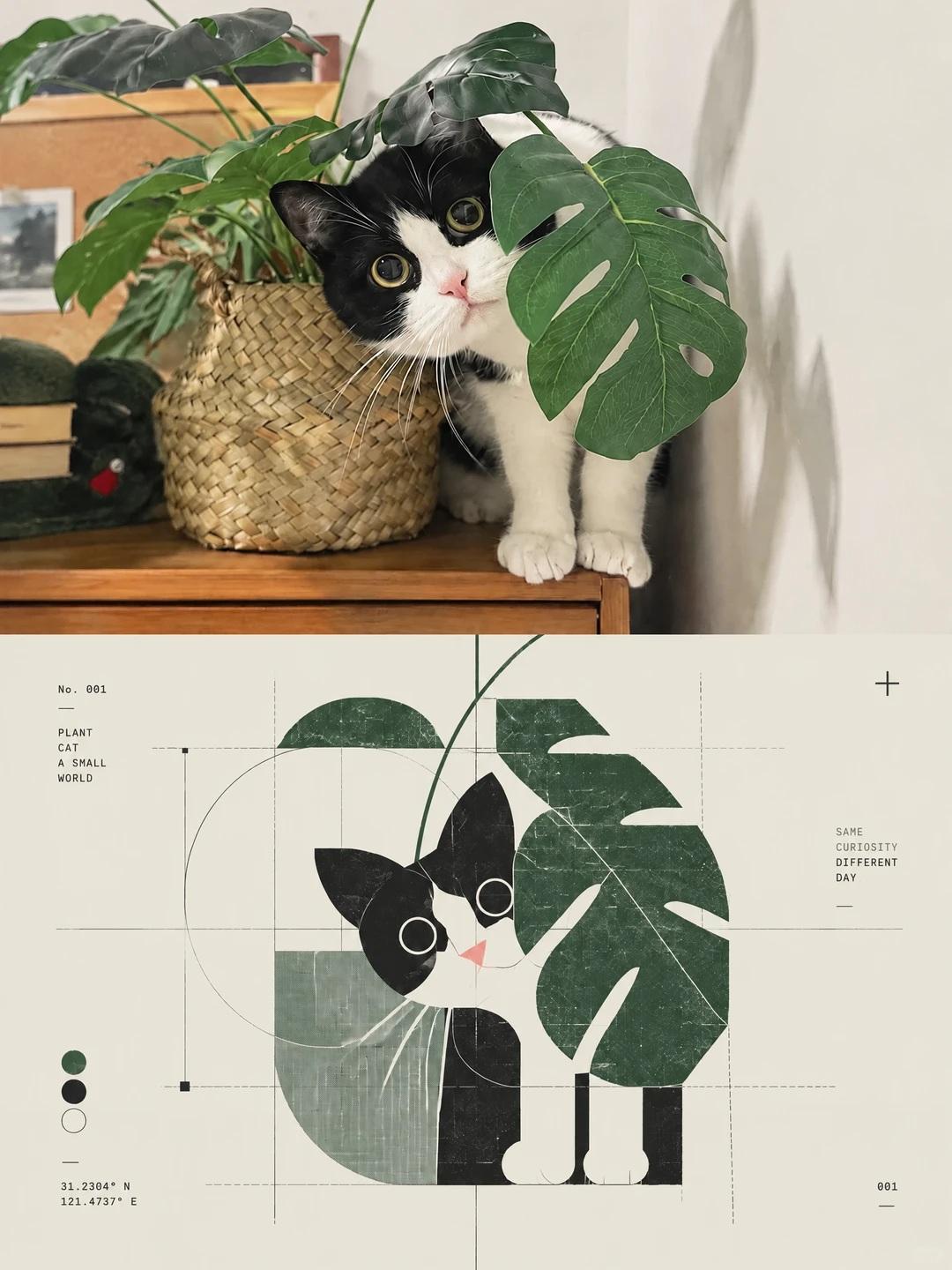
提示词
English
Transform the uploaded photograph into a standalone, premium 3:4 vertical design poster.

1. Overall Composition & Layout

Divide the entire canvas into two perfectly equal horizontal sections:

- Top 50%: Original photographic image.
- Bottom 50%: Abstract visual identity derived from the core essence of the photograph.

Maintain a precise 1:1 vertical division between the two sections. The final result should feel like a sophisticated art publication, experimental design poster, and high-end visual identity system.

2. Upper Section — Artistic Photography

Preserve the original photograph's subject, composition, structural details, realistic textures, natural lighting, shadows, and authentic color atmosphere.

Apply only subtle, sophisticated color grading to elevate the image into an editorial fine-art photography aesthetic.

- Maintain the original subject's identity, proportions, pose, and physical characteristics.
- Do not stretch, distort, reconstruct, or alter the subject.
- Extend the background naturally if necessary to accommodate the 3:4 vertical composition.
- Preserve the original photographic realism.
- Avoid excessive retouching, artificial effects, or overly stylized color grading.

The result should resemble premium editorial photography featured in an independent art and design publication.

3. Lower Section — Abstract Visual Identity

Extract the photograph's essential visual DNA and translate it into an independent, abstract graphic symbol.

Identify the most recognizable characteristics of the subject:

- Silhouette and overall outline.
- Structural geometry and distinctive forms.
- Pose, movement, or spatial relationships.
- Core narrative and emotional character.

Do not recreate the complete subject or produce a literal illustration. Instead, reduce its defining characteristics into a minimal, recognizable abstract visual mark.

Use:

- Geometric deconstruction.
- Modular shapes and structural blocks.
- Precision linework and architectural geometry.
- Negative space.
- Symbolic forms and visual simplification.
- Circular trajectories, grids, and abstract nodes.

The final symbol should feel like the central identity mark of a high-end creative studio, experimental design label, architectural practice, or contemporary art institution.

4. Visual Design Language

Explore a sophisticated combination of:

- Post-digital graphic design.
- Deconstructed Swiss design.
- Generative symbol systems.
- Diagrammatic abstraction.
- Experimental editorial typography.
- Contemporary visual identity design.

Create a visual tension between:

- Order and imperfection.
- Precision and handmade irregularity.
- Digital systems and analog aesthetics.
- Rational geometry and emotional expression.

Use geometric modules, delicate lines, circular arcs, subtle grids, micro-symbols, numbering systems, and abstract structural connections.

Keep the composition extremely restrained. The abstract symbol must remain the single dominant visual focal point, positioned centrally or slightly off-center, surrounded by generous negative space.

Avoid visual clutter, excessive decorative elements, multiple competing icons, or infographic-style layouts.

5. Typography & Micro-Details

Typography should function only as a subtle component of the visual system, never as the main headline.

Optionally incorporate:

- Tiny serial numbers.
- Minimal alphanumeric codes.
- Short experimental annotations.
- Small indexing labels.
- Fine typographic markers.

Use refined, minimalist typography with an archival, technical, experimental-publication aesthetic.

Every typographic element should feel intentional and structurally connected to the abstract symbol.

6. Color System

Extract the dominant and most distinctive colors directly from the original photograph.

Reinterpret them as a coherent visual identity color palette.

Use:

- Warm white, off-white, or soft grey as the primary background.
- Restrained accent colors such as teal, cyan, blue, magenta, or orange when supported by the original image.
- Small, highly intentional color accents as functional visual codes.

Color should communicate structure and identity rather than serve as decoration.

Avoid chaotic color combinations, cheap neon effects, oversaturated palettes, and generic commercial gradients.

7. Print Texture & Material Treatment

Introduce subtle physical imperfections to give the digital composition the tactile quality of a printed experimental art publication.

Incorporate:

- Xerox photocopy texture.
- Risograph grain.
- Subtle print registration misalignment.
- Fine scanner noise.
- Delicate paper grain.
- Slightly imperfect edges.
- Minimal analog printing artifacts.

Keep these textures extremely subtle and controlled. They should enhance the material quality without compromising clarity, precision, or visual hierarchy.

8. Final Art Direction

The final poster should communicate the feeling of a sophisticated, independent visual identity extracted directly from the original photograph.

The upper half represents the original subject through authentic photography.

The lower half represents its visual essence through an abstract, independently recognizable graphic identity.

The two sections should feel conceptually connected while maintaining distinct visual languages.

Creative references: Contemporary art institutions, experimental publishing, architectural identity systems, Swiss graphic design, independent creative studios, and high-end cultural branding.

Final aesthetic: Minimal, intelligent, conceptual, architectural, editorial, tactile, and visually distinctive.

Strict requirements:

- Vertical 3:4 aspect ratio.
- Exact 50% photographic / 50% abstract division.
- Preserve the original photograph without distorting its subject.
- One dominant abstract symbol in the lower half.
- Generous negative space.
- Sophisticated, restrained color palette.
- Subtle physical print textures.
- No unnecessary decorations, excessive text, or infographic layouts.

The ultimate goal is to extract a unique visual DNA from the photograph and transform it into a self-contained abstract logo — a minimal, culturally resonant visual identity with its own character, memory, and design language.
中文
将上传的照片变换为一张独立的、高级的 3:4 垂直设计海报。

1. 整体构图与布局

将整个画布分为两个完全相等的水平部分:

- 顶部 50%:原始摄影图像。
- 底部 50%:从照片核心本质衍生出的抽象视觉标识。

在两个部分之间保持精确的 1:1 垂直划分。最终结果应感觉像是一份精致的艺术出版物、实验性设计海报和高端视觉识别系统。

2. 上半部分 — 艺术摄影

保留原始照片的主体、构图、结构细节、逼真的纹理、自然的光线、阴影和真实的色彩氛围。

仅应用微妙、精致的调色,将图像提升为社论美术摄影美学。

- 保持原始主体的身份、比例、姿势和物理特征。
- 不要拉伸、扭曲、重构或改变主体。
- 如有必要,自然延伸背景以适应 3:4 的垂直构图。
- 保留原始摄影的写实感。
- 避免过度修图、人工效果或过度程式化的调色。

结果应类似于独立艺术和设计出版物中的高级社论摄影。

3. 下半部分 — 抽象视觉标识

提取照片的核心视觉 DNA 并将其转化为独立的抽象图形符号。

识别主体最容易识别的特征:

- 轮廓和整体外线。
- 结构几何和独特的形状。
- 姿势、运动或空间关系。
- 核心叙事和情感特征。

不要重建完整的主体或制作写实的插图。相反,将其定义的特征简化为一个极简的、可辨认的抽象视觉标记。

使用:

- 几何解构。
- 模块化形状和结构块。
- 精准的线条和建筑几何。
- 负空间。
- 象征性形式和视觉简化。
- 圆形轨迹、网格和抽象节点。

最终符号应感觉像是一家高端创意工作室、实验设计品牌、建筑事务所或当代艺术机构的核心标识。

4. 视觉设计语言

探索以下项的精致结合:

- 后数字化平面设计。
- 解构的瑞士设计。
- 生成符号系统。
- 图表抽象。
- 实验性社论排版。
- 当代视觉识别设计。

在以下项之间创造视觉张力:

- 秩序与不完美。
- 精确与手工的不规则感。
- 数字系统与模拟美学。
- 理性几何与情感表达。

使用几何模块、细腻的线条、圆弧、微妙的网格、微型符号、编号系统和抽象的结构连接。

保持构图极其克制。抽象符号必须保持为唯一的单一主导视觉焦点,位于中心或稍微偏离中心,周围环绕大量的负空间。

避免视觉混乱、过多的装饰元素、多个相互竞争的图标或信息图表风格的布局。

5. 排版与微小细节

排版应仅作为视觉系统的微妙组成部分,绝不能作为主要标题。

可选地加入:

- 微小的序列号。
- 极简的字母数字代码。
- 简短的实验性注释。
- 小型索引标签。
- 精细的排版标记。

使用精致、极简的排版,具有档案、技术、实验出版物的美学。

每一个排版元素都应让人感到是刻意为之的,并与抽象符号在结构上相连。

6. 色彩系统

直接从原始照片中提取主导和最具特色的颜色。

将它们重新诠释为连贯的视觉识别色板。

使用:

- 暖白、灰白或柔和的灰色作为主要背景。
- 在原始图像支持的情况下,使用克制的强调色,如鸭蛋青、青色、蓝色、洋红色或橙色。
- 小型、高度刻意的色彩强调作为功能的视觉代码。

色彩应传达结构和身份,而不是作为装饰。

避免混乱的色彩组合、廉价的霓虹效果、过饱和的色板和通用的商业渐变。

7. 印刷纹理与材质处理

引入微妙的物理瑕疵,赋予数字化构图以印刷实验艺术出版物的触感。

加入:

- 施乐复印纹理。
- 孔版印刷颗粒。
- 微妙的印刷套准错位。
- 精细的扫描仪噪点。
- 细腻的纸张颗粒。
- 略微不完美的边缘。
- 极简的模拟印刷痕迹。

保持这些纹理极其微妙且受控。它们应该在不损害清晰度、精确度或视觉层级的情况下增强材质感。

8. 最终艺术指导

最终海报应传达一种直接从原始照片中提取的精致、独立的视觉识别感。

上半部分通过真实的摄影表现原始主体。

下半部分通过抽象的、可独立辨认的图形标识表现其视觉本质。

这两个部分应在保持截然不同的视觉语言的同时,在概念上产生关联。

创意参考:当代艺术机构、实验出版、建筑识别系统、瑞士平面设计、独立创意工作室和高端文化品牌。

最终美学:极简、智能、概念化、建筑感、社论化、触感且视觉独特。

严格要求:

- 垂直 3:4 宽高比。
- 精确的 50% 摄影 / 50% 抽象划分。
- 保留原始照片而不扭曲其主体。
- 下半部分一个主导的抽象符号。
- 大量的负空间。
- 精致、克制的色板。
- 微妙的物理印刷纹理。
- 没有不必要的装饰、过多的文本或信息图表布局。

最终目标是从照片中提取独特的视觉 DNA 并将其转化为一个自给自足的抽象标志 —— 一个具有自身特征、记忆和设计语言的极简、具有文化共鸣的视觉标识。