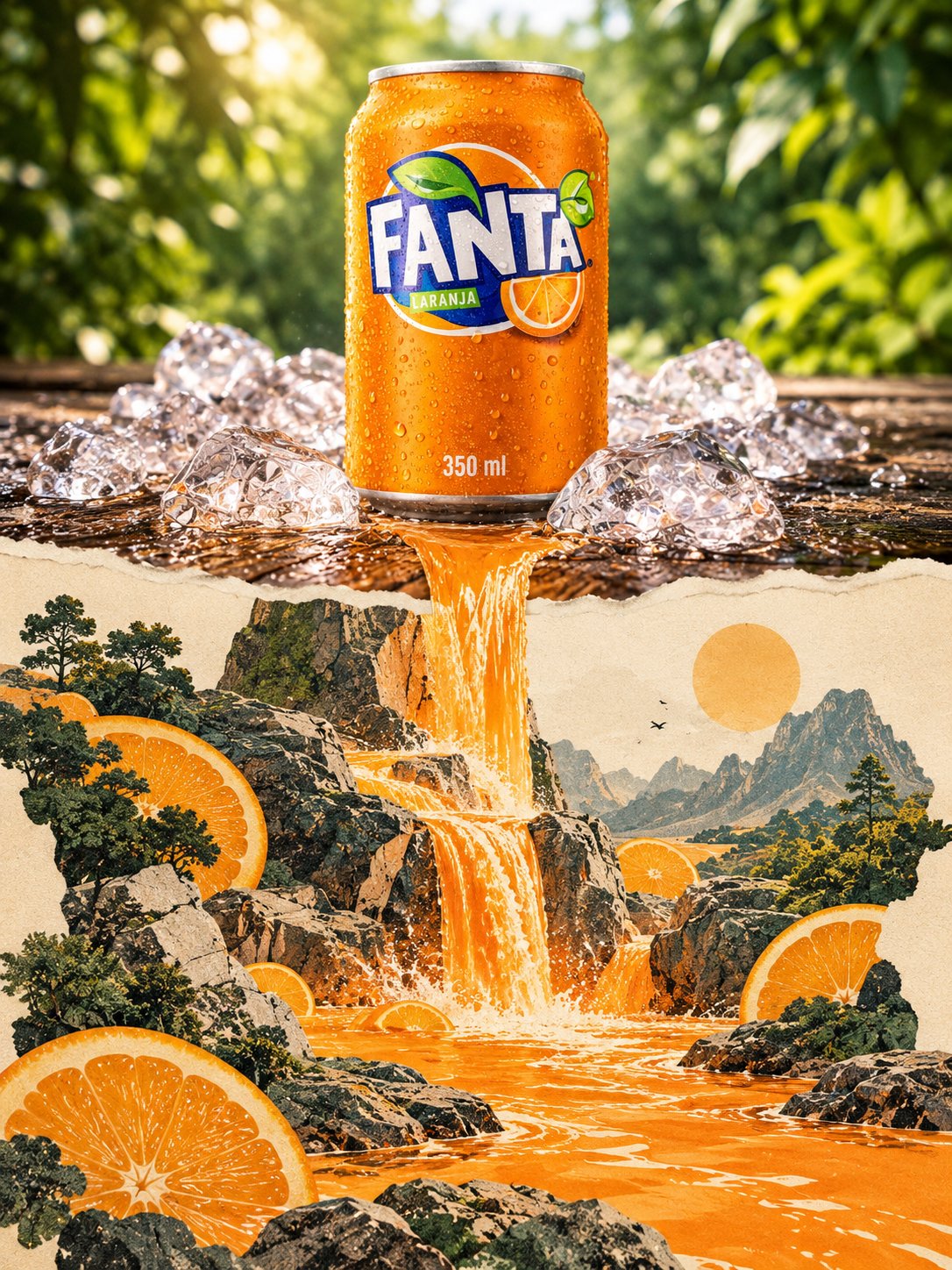
现实与剪纸世界交融的纵向海报
来源: @Goodmanprotocol模型: ChatGPT
📸 示例图片
提示词
English
Upload a photograph and transform it into a single, standalone poster. Do not create a collage or combine multiple images. Use a vertical 3:4 aspect ratio, divided into two strictly equal horizontal sections, each occupying exactly 50% of the canvas. Together, the two sections must form one continuous scene: the upper half remains a realistic photograph, while the lower half becomes a “second world” that appears to grow naturally from within the original image.

UPPER HALF — FAITHFUL PHOTOGRAPHIC PRESERVATION

Faithfully preserve the original photograph’s subject identity, primary subjects, clothing, accessories, objects, environment, composition, poses, proportions, spatial relationships, perspective, materials, depth of field, natural lighting, shadows, and overall color atmosphere.

Do not redraw, replace, rearrange, or reinterpret the original elements. Only subtle cropping, background extension, and extremely light color grading are permitted to accommodate the canvas. Never stretch, distort, or alter the subject’s original movements or poses.

CONTINUITY BETWEEN THE TWO HALVES — HIGHEST PRIORITY

For each photograph, identify a natural structural element that reaches the horizontal midpoint, such as a road, body of water, tree branch, beam of light, architectural feature, or bodily gesture.

This element must align precisely at the dividing line and continue seamlessly into the lower half. The same scene should appear to cross the boundary and gradually transform, as though its physical rules change beyond the midpoint.

CENTRAL DIVIDE — NATURAL TORN-PAPER EDGE

An irregular torn-paper edge may be introduced along the center, following the source structure and the natural flow of the composition. It must never look decorative or follow a fixed template.

The torn edge must remain completely flat against the canvas, with no cast shadows, curled edges, lifted corners, or three-dimensional thickness. Original elements may touch, cross, or break through the torn boundary to create a natural, integrated transition.

LOWER HALF — THE SECOND WORLD

Use warm ivory paper with subtle visible fibers, a tactile surface, and generous negative space as the foundation.

Continue developing the scene downward from the point where the original structure meets the dividing line. Preserve the original photograph’s visual focal point, subject silhouettes, poses, perspective, inherent colors, lighting, emotional atmosphere, and narrative.

Build upon these preserved elements using restrained photographic fragments, carefully composed paper-cut shapes, and a minimal number of black hand-drawn lines. The transformation should feel like a natural extension of the original photograph rather than an unrelated illustration.

The final result should be a sophisticated, premium editorial poster in which realistic photography transitions organically into a tactile, surreal paper-cut world, maintaining visual coherence, precise spatial continuity, elegant restraint, and a strong sense of depth.
中文
上传一张照片并将其转化为一张独立的、单一的海报。不要创建拼贴画或组合多张图片。使用 3:4 的纵横比,严格划分为两个相等的水平部分,每个部分正好占据画布的 50%。这两个部分必须共同构成一个连续的场景:上半部分保留写实摄影,下半部分则变成一个“第二世界”,看起来像是从原始图像内部自然生长出来的。

上半部分——忠实摄影保留

忠实地保留原始照片的主体身份、主要对象、服装、配饰、物体、环境、构图、姿势、比例、空间关系、透视、材料、景深、自然光影以及整体色彩氛围。

不要重新绘制、替换、重新排列或重新解释原始元素。仅允许进行细微的裁剪、背景延伸和极其轻微的调色,以适应画布。切勿拉伸、扭曲或改变主体的原始动作或姿势。

两部分之间的连续性——最高优先级

对于每张照片,识别一个到达水平中点的自然结构元素,例如道路、水体、树枝、光束、建筑特征或身体姿态。

该元素必须在分割线处精准对齐,并无缝延续到下半部分。同一个场景应该看起来跨越了边界并逐渐发生转变,仿佛物理规则在中点之外发生了变化。

中心分割——自然撕纸边缘

可以沿中心引入不规则的撕纸边缘,遵循源结构和构图的自然流动。它绝不能看起来像装饰性的或遵循固定的模板。

撕裂边缘必须完全平贴在画布上,没有投影、卷曲边缘、翘起的角或三维厚度。原始元素可以接触、穿过或突破撕裂边界,以创造自然、整合的过渡。

下半部分——第二世界

以带有微妙可见纤维、触感表面和大量留白的暖象牙色纸张为基础。

从原始结构与分割线相遇的点开始向下继续构建场景。保留原始照片的视觉焦点、主体轮廓、姿势、透视、固有色彩、光线、情感氛围和叙事。

在这些保留元素的基础上,使用克制的摄影碎片、精心组合的剪纸形状和极少数黑色手绘线条。这种转化应该感觉像是原始照片的自然延伸,而不是无关的插画。

最终结果应该是一张精致、高端的社论海报,其中写实摄影有机地过渡到一个具有触感的、超现实的剪纸世界,保持视觉连贯性、精准的空间连续性、优雅的克制和强烈的深度感。