摄影写实与抽象符号极简海报设计
来源: @Sairah_0模型: ChatGPT
📸 示例图片
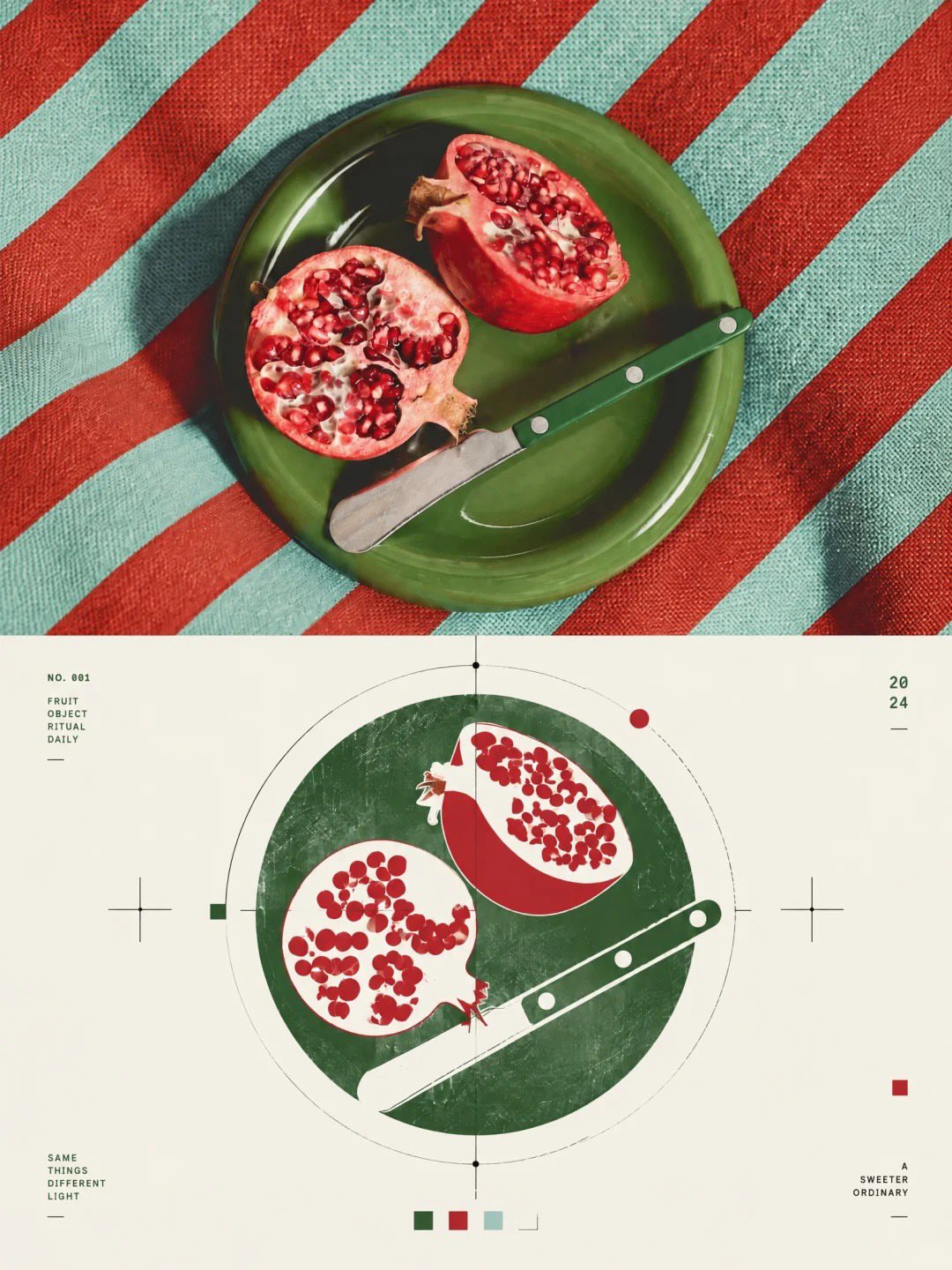
提示词
English
Transform my uploaded photo into a standalone, premium-quality 3:4 vertical design poster. Divide the entire canvas into two perfectly equal horizontal sections: the top half (50%) and the bottom half (50%). The upper section should feature realistic photography, while the lower section should present an abstract visual symbol derived from the core identity of the subject.

TOP HALF – REALISTIC PHOTOGRAPHY

Preserve the original subject's structure, realistic textures, natural lighting, shadows, and original color atmosphere. Apply only subtle, sophisticated color grading to achieve the aesthetic of fine-art photography and independent editorial publications.

The background may be naturally extended to fit the canvas, but never stretch, distort, or alter the original subject.

BOTTOM HALF – ABSTRACT VISUAL IDENTITY

Extract the photograph's essential visual characteristics: the subject's silhouette, structure, posture, and narrative relationships. Do not recreate the entire object. Instead, reduce it into a recognizable abstract visual symbol.

Use geometric deconstruction, modular shapes, structured lines, negative space, and symbolic elements to create a central visual identity inspired by premium branding and experimental design systems.

Focus on the subject's core character rather than minor details. Even with minimal geometric elements, the abstract symbol must remain visually connected to the original photograph.

VISUAL STYLE & DESIGN LANGUAGE

Post-digital graphic design, deconstructed Swiss design, generative symbol systems, and diagrammatic abstraction.

Build a systematic visual language using geometric modules, fine lines, circular trajectories, grids, micro-symbols, numerical indexing, and abstract nodes.

Create visual tension between:
- Order × Imperfection
- Precision × Handmade Traces
- Digital × Analog
- Rationality × Emotion

Achieve strong visual recognition using the fewest possible elements. Keep everything minimal and avoid unnecessary complexity.

COMPOSITION & LAYOUT

Maintain a highly restrained composition. The abstract symbol must be the sole visual focal point, positioned centrally or slightly off-center, surrounded by generous negative space.

Avoid excessive icons, decorative elements, or infographic-style layouts.

The overall aesthetic should resemble the core visual identity of contemporary art institutions, architectural studios, experimental creative labels, and premium design brands.

TYPOGRAPHY & DETAILS

Typography should function only as a supporting system component, never as a dominant headline.

You may incorporate extremely small numbers, letters, or short phrases that interact with the abstract symbol through indexing and reference relationships.

Use refined, restrained typography with the subtle annotation aesthetic of archival documents and experimental art publications.

COLOR SYSTEM

Extract the signature colors from the original photograph and reinterpret them as a cohesive brand color system.

Introduce a small number of distinctive accent colors as functional visual codes, such as teal, blue, magenta, or orange, combined with gray-white or warm-white backgrounds for contrast.

Colors should function as systematic identifiers rather than decoration.

Avoid chaotic color combinations, cheap neon effects, and generic commercial gradients.

PRINT TEXTURE & MATERIALITY

Incorporate subtle material effects inspired by:
- Xerox texture
- Risograph grain
- Print registration errors
- Scanner noise
- Subtle paper texture

Add delicate printing misalignment, fine grain, scanning noise, and slightly imperfect edges to give the digital symbols the tactile quality of physical print.

FINAL OBJECTIVE

Extract an independent and self-contained visual DNA from the original photograph.

The final result should feel like a sophisticated, minimal, culturally meaningful abstract logo with a strong visual identity and systematic design language.
中文
将我上传的照片转换成一个独立的、高品质的 3:4 垂直设计海报。将整个画布分成两个完全相等的水平部分:上半部分 (50%) 和下半部分 (50%)。上半部分应以写实摄影为特色,而下半部分应呈现一个源自主体核心身份的抽象视觉符号。

上半部分 – 写实摄影

保留原始主体的结构、真实的纹理、自然的光影、阴影和原始色彩氛围。仅应用微妙、精致的调色,以实现艺术摄影和独立编辑出版物的审美。

背景可以自然延伸以适应画布,但绝不要拉伸、扭曲或改变原始主体。

下半部分 – 抽象视觉身份

提取摄影作品的基本视觉特征:主体的轮廓、结构、姿态和叙事关系。不要重塑整个物体。相反,将其简化为一个可辨识的抽象视觉符号。

使用几何解构、模块化形状、结构化线条、负空间和象征性元素,创建一个灵感源自高级品牌和实验性设计系统的核心视觉身份。

专注于主体的核心特征而非微小细节。即使使用最少的几何元素,抽象符号也必须保持与原始照片的视觉联系。

视觉风格与设计语言

后数字平面设计、解构主义瑞士设计、生成式符号系统和图解式抽象。

使用几何模块、细线、圆形轨迹、网格、微型符号、数字索引和抽象节点构建系统化的视觉语言。

在以下方面建立视觉张力:
- 秩序 × 不完美
- 精准 × 手作痕迹
- 数字 × 模拟
- 理性 × 情感

使用尽可能少的元素实现强大的视觉辨识度。保持一切极简,避免不必要的复杂性。

构图与布局

保持高度克制的构图。抽象符号必须是唯一的视觉焦点,居中或略微偏离中心放置,周围留有大量的负空间。

避免过多的图标、装饰元素或信息图风格的布局。

整体审美应类似于当代艺术机构、建筑工作室、实验性创意厂牌和高级设计品牌的视觉核心身份。

排版与细节

排版应仅作为辅助系统组件,绝不能作为主导标题。

你可以加入极小的数字、字母或短语,通过索引和引用关系与抽象符号互动。

使用精致、克制的排版,带有档案文件和实验性艺术出版物的微妙注释审美。

色彩系统

从原始照片中提取标志性颜色,并将其重新解释为一致的品牌色彩系统。

引入少量独特的强调色作为功能性视觉代码,如青色、蓝色、洋红色或橙色,结合灰白色或暖白色背景以形成对比。

色彩应作为系统性的标识符而非装饰。

避免混乱的色彩组合、廉价的霓虹效果和通用的商业渐变。

印刷质感与物质性

融入灵感源自以下的微妙材质效果:
- 施乐纹理
- Risograph 颗粒
- 印刷套印误差
- 扫描仪噪点
- 微妙的纸张纹理

添加精致的印刷错位、细腻的颗粒、扫描噪点和略微不完美的边缘,赋予数字符号以实体印刷品的触感。

最终目标

从原始照片中提取一个独立且自给自足的视觉 DNA。

最终结果应该感觉像一个精致、极简、具有文化内涵的抽象标志,具有强大的视觉身份和系统化的设计语言。