摄影玻璃与手绘微缩人物虚实结合海报
来源: @MrLarus模型: ChatGPT
📸 示例图片
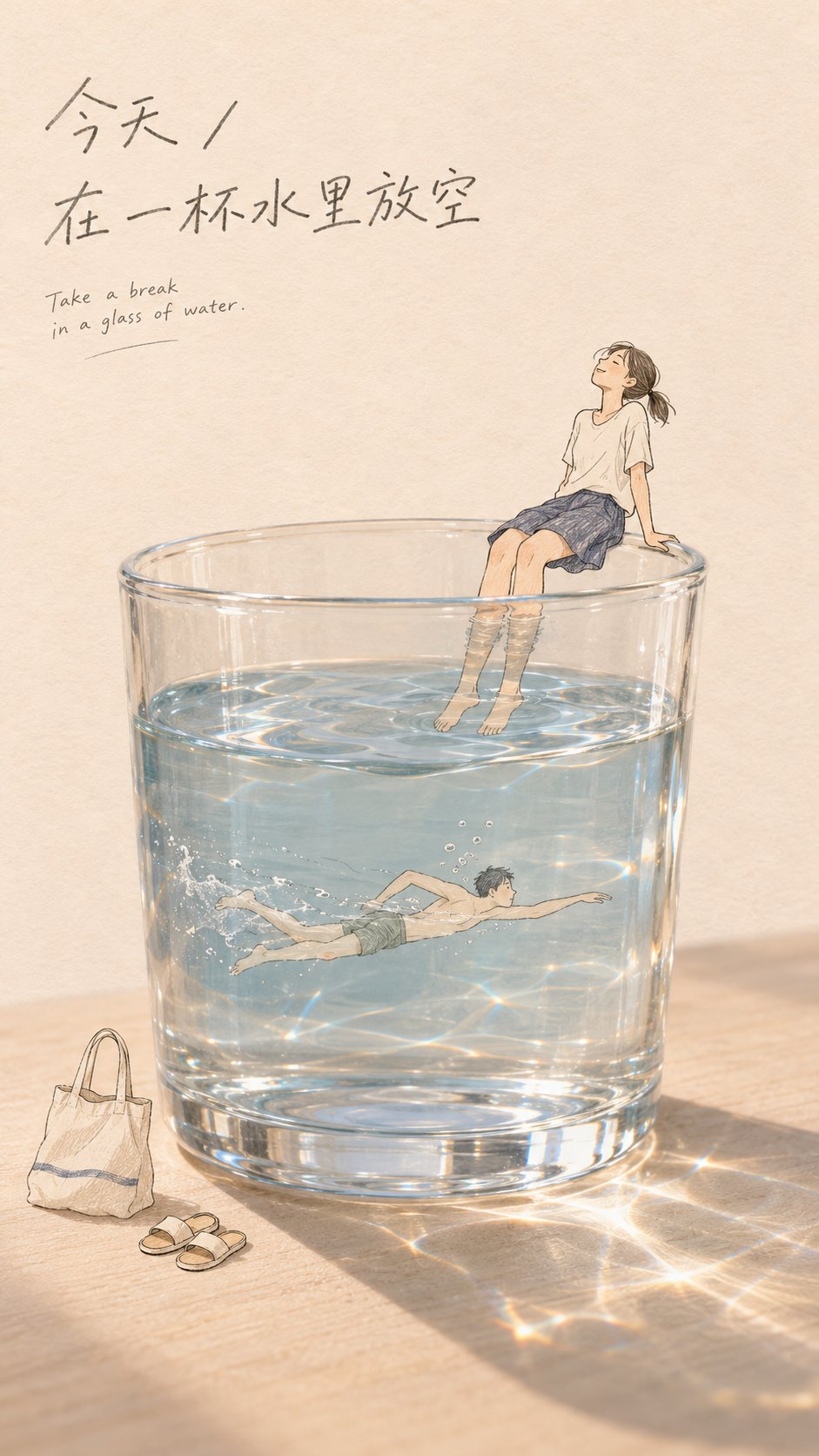
提示词
English
[Transparent Core Object]: {Glass / Perfume Bottle / Vase / Glass Ball / Other transparent container}
[Space Function]: {Pool / Elevator / Greenhouse / Subway Station / Cafe / Reading Room etc.}
[Hand-drawn Characters]: {Number of characters, identity, action and outfit}
[Internal Elements]: {Water / Plants / Furniture / Vehicles etc.}
[Main Copy]: {A short, vivid Chinese sentence}
[Aspect Ratio]: {Default 9:16}

Create a "Photographic Transparent Glass × Hand-drawn Miniature Characters" reality-merging creative poster.

Scale the [Transparent Core Object] to the scale of a building or living space, and truly transform it into [Space Function]. Do not just place the little people next to the object, but let the characters truly enter the interior of the glass and use this space naturally.

The transparent object must maintain an obvious photographic realism, including real glass thickness, edge highlights, reflections, light transmission, refraction, caustics, shadows, as well as local magnification, compression, and visual offset caused by different curved surfaces.

The most important thing is to let these real optical effects truly act on the hand-drawn characters and the internal space. For example, when characters are observed through the glass, their legs, bodies, or personal belongings show slight refractive distortion; after light passes through the glass, it forms natural caustics on the ground, characters, or internal facilities, so that the characters truly exist in the transparent space, rather than being simply pasted on the surface of the photo.

[Hand-drawn Characters] maintain obvious two-dimensional picture book language: black and gray pencil sketches, a small amount of colored pencils or light watercolors, simple facial features, and slender adult body proportions. The characters' actions are natural and life-like; they can read, wait for a bus, swim, drink coffee, take an elevator, or rest, not looking at the camera, and not posing like models.

Internal elements such as characters, furniture, and vehicles can remain hand-drawn or lightly semi-realistic, while core materials such as transparent glass, water, and plants maintain a stronger sense of photography, forming a visual collision of "half like real photography, half like a hand-drawn picture book."

The environment remains minimalist, using large areas of warm cream white, light beige paper, or clean living spaces as backgrounds, retaining only a few elements related to the theme. Do not construct complex rooms, cities, or commercial scenes.

The composition adopts "Giant Transparent Subject + Miniature Characters + Large White Space":

The core glass object occupies the main visual area, and the characters are relatively small, enhancing the visual surprise through the obvious scale contrast; even in the thumbnail state, one should be able to understand at first glance "what space this transparent object has been transformed into."

Add [Main Copy] in the blank area, using a natural, not completely regular Chinese handwritten font, like the inscription in a diary, notebook, or independent picture book. A very small English marginal note can be added, but do not pile up a large amount of text.

The overall light uses soft natural light to fully express the refraction, reflection, caustics, and light transmission of the transparent material, while keeping the picture fresh, warm, life-like, and with an editorial poster feel.

The final effect should let the audience see a real transparent object with a strong photographic texture at first glance, and only at the second glance discover that a group of hand-drawn little people are actually living inside, and further notice the real physical interaction between glass refraction, light and shadow, and the characters.
中文
【透明核心物体】:{玻璃杯 / 香水瓶 / 花瓶 / 玻璃球 / 其他透明容器}
【空间功能】:{泳池 / 电梯 / 温室 / 地铁站 / 咖啡馆 / 阅读室等}
【手绘人物】:{人物数量、身份、动作与穿搭}
【内部元素】:{水 / 植物 / 家具 / 交通工具等}
【主文案】:{一句简短、有画面感的中文短句}
【画幅比例】:{默认 9:16}

创作一张「摄影级透明玻璃 × 手绘微型人物」虚实结合创意海报。

将【透明核心物体】放大到建筑或生活空间的尺度,并真正改造成【空间功能】。不要只是把小人放在物体旁边,而是让人物真实进入玻璃内部,并自然地使用这个空间。

透明物体必须保持明显的摄影级真实质感,包括真实玻璃厚度、边缘高光、反射、透光、折射、焦散、投影,以及不同曲面造成的局部放大、压缩和视觉偏移。

最重要的是让这些真实光学效果真正作用到手绘人物和内部空间上。例如人物经过玻璃观察时,腿部、身体或随身物品出现轻微折射变形;光线穿过玻璃后在地面、人物或内部设施上形成自然焦散,使人物真正存在于透明空间中,而不是简单贴在照片表面。

【手绘人物】保持明显二维绘本语言:黑灰铅笔线稿、少量彩铅或轻水彩、简洁五官、修长成年人体比例。人物动作自然生活化,可以阅读、候车、游泳、喝咖啡、乘电梯或休息,不看镜头,不摆模特姿势。

人物、家具、交通工具等内部元素可以保持手绘或轻半写实,而透明玻璃、水、植物等核心材质保持更强摄影感,形成“一半像真实摄影,一半像手绘绘本”的视觉碰撞。

环境保持极简,大面积使用暖奶油白、浅米色纸张或干净生活空间作为背景,只保留与主题有关的少量元素。不要构建复杂房间、城市或商业场景。

构图采用「巨大透明主体 + 微型人物 + 大留白」:

核心玻璃物体占据主要视觉面积,人物相对较小,通过明显尺度反差增强视觉惊喜;缩略图状态下也应该能第一眼看懂“这个透明物体被改造成了什么空间”。

在留白区域加入【主文案】,使用自然、不完全规整的中文手写字体,像日记、手账或独立绘本中的题字。可加入一句很小的英文旁注,但不要堆放大量文字。

整体光线使用柔和自然光,充分表现透明材质的折射、反射、焦散和透光,同时保持画面清爽、温暖、有生活感和编辑海报感。

最终效果应该让观众第一眼看到一个摄影质感很强的真实透明物体,第二眼才发现里面竟然生活着一群手绘小人,并进一步注意到玻璃折射、光影和人物之间真实的物理互动。