现代东方纸感微型场景编辑海报
来源: @MrLarus模型: ChatGPT
📸 示例图片
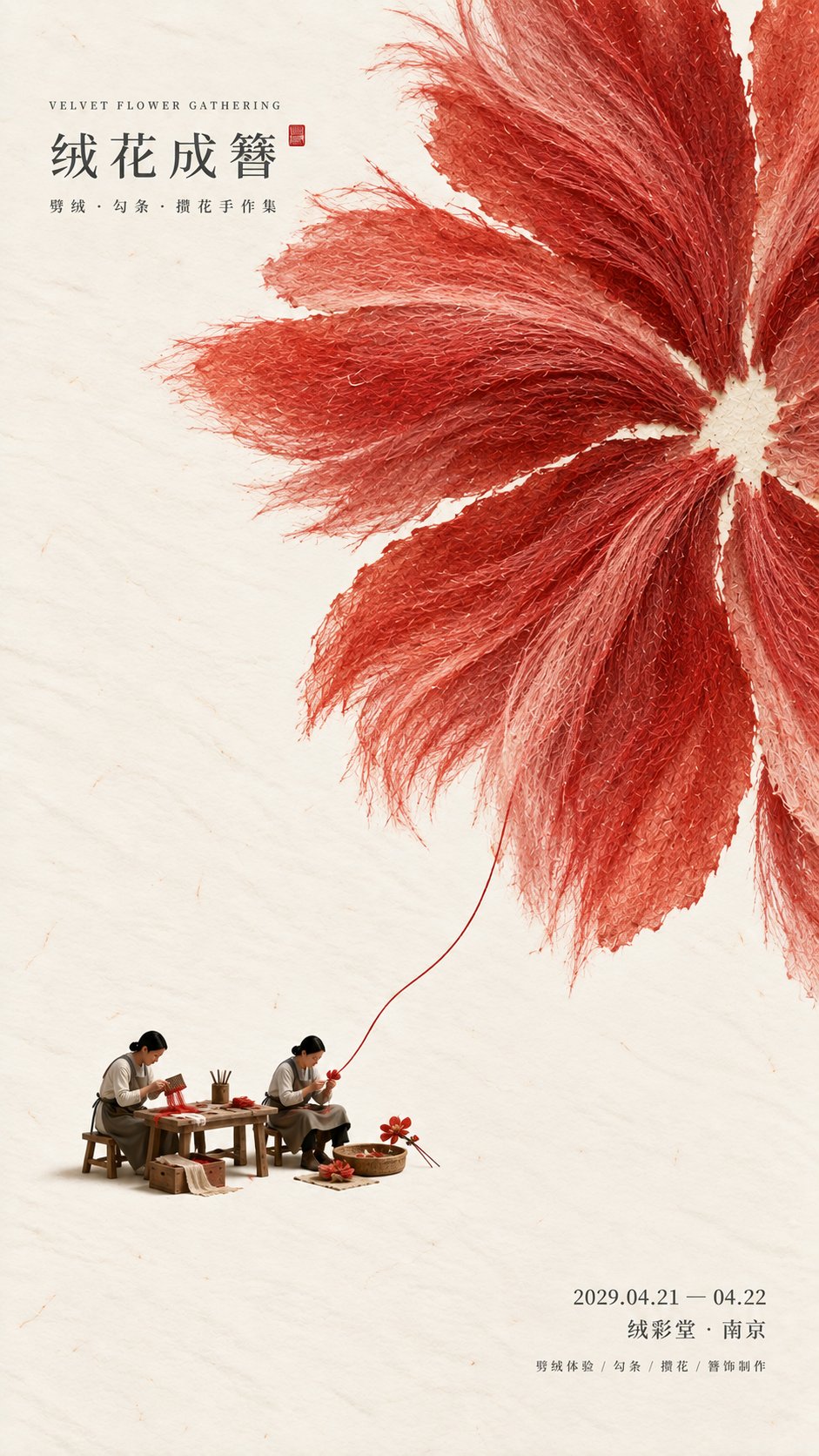
提示词
English
[Poster Theme]
[Main Title]
[Core Large Color Gamut]
[Structural Method]
[Main Color Tone]
[Miniature Cultural Scene]
[Character Action]
[Cultural Artifacts]
[Event Information]
[Aspect Ratio]

Design a modern Oriental culture event poster, with "paper fiber + large color gamut + active negative space + miniature cultural scene" as the core.

The background uses warm ivory white handmade paper, retaining about 45%–60% large area white space. Use [Core Large Color Gamut] to establish the primary visual, forming a clear and methodical large-scale relationship according to [Structural Method]. The theme can be expressed through fiber radiation, paper cutouts, crack connections, positive-negative shape transformation, or rubbing marks, but do not directly create ordinary realistic objects.

The large color gamut has obvious natural paper fibers, pulp particles, watercolor or mineral pigment deposits, natural rough edges, and a matte texture. The overall style uses [Main Color Tone], colors are low-saturation but complete and dense; from a distance, the large shapes and color relationships are seen first, and material details are only discovered upon close inspection.

Add a very small scale [Miniature Cultural Scene] near the large color gamut, where characters are genuinely performing [Character Action]. Characters, tools, and [Cultural Artifacts] overall occupy only about 3%–5%, no staged poses or product displays.

Characters uniformly adopt a two-dimensional paper-based light color illustration style: simple facial features, light volume, complete flat color blocks, a few continuous clothing fold lines, belonging to the same visual world as the paper and color gamut. Avoid photographic realism, 3D miniature models, CGI lighting and shadow, strong projections, and real depth of field.

Establish a real scale connection between the miniature scene and the huge main visual, such as fibers, paper scraps, cracks, mending staples, ink marks, tool trajectories, or the material itself, allowing "small manual actions" to naturally extend into a "large color gamut structure."

The main title [Main Title] uses small-scale modern Songti or Mingti fonts, placed in the white space area; date, location, and [Event Information] use smaller font sizes for restrained layout. The text does not compete with the main visual, and no meaningless placeholder words are added.

The overall reading order is:

Negative space and large color gamut → structural relationship → paper fiber texture → miniature cultural scene → craftsmanship actions → title and event information.

The final presentation is an Oriental editorial poster that is eye-catching from afar, with a paper feel, details, and cultural stories upon close inspection.

Avoid giant titles, ordinary Chinese style illustrations, realistic characters, 3D miniature models, photographic backgrounds, PPT grids, commercial advertising feel, dirty old paper, random noise, CGI, glass or mirror materials, Logos, watermarks, numbering, and starburst decorations.
中文
【海报主题】
【主标题】
【核心大色域】
【结构方式】
【主色调】
【微型文化场景】
【人物动作】
【文化器物】
【活动信息】
【画幅比例】

设计一张现代东方文化活动海报,以「纸纤维 + 大色域 + 主动留白 + 微型文化场景」为核心。

背景使用温润的暖象牙白手工纸,保留约 45%–60% 大面积留白。使用【核心大色域】建立第一视觉,根据【结构方式】形成清楚、有方法感的大形关系,可以通过纤维放射、纸面镂空、裂缝连接、正负形转换或拓印痕迹表达主题,但不要直接做成普通写实物体。

大色域具有明显天然纸纤维、纸浆颗粒、水彩或矿物颜料沉积、自然毛边和哑光质感。整体采用【主色调】,颜色低饱和但完整、有浓度,远看首先看到大形和色彩关系,近看才发现材料细节。

在大色域附近加入尺度很小的【微型文化场景】,人物正在真实完成【人物动作】,人物、工具和【文化器物】整体只占约 3%–5%,不做摆拍或商品陈列。

人物统一采用二维纸本淡彩插画画法:五官简洁、轻体积、完整平面色块、少量连续衣褶线,与纸张和色域属于同一个视觉世界。避免摄影真人感、3D 微缩模型、CGI 光影、强投影和真实景深。

微型场景与巨大主视觉之间建立一处真实的尺度连接,例如纤维、纸屑、裂隙、锔钉、墨迹、工具轨迹或材料本身,让“小手工动作”自然延展成“大色域结构”。

主标题【主标题】使用小尺度现代宋体或明朝体,放在留白区域;日期、地点和【活动信息】使用更小字号克制排版。文字不抢主视觉,不加入无意义占位词。

整体阅读顺序为:

留白与大色域 → 结构关系 → 纸纤维质感 → 微型文化场景 → 工艺动作 → 标题与活动信息。

最终呈现远看抓眼、近看有纸感、有细节、有文化故事的东方编辑海报。

避免巨大标题、普通国风插画、写实人物、3D 微缩模型、摄影背景、PPT 网格、商业广告感、脏旧纸张、随机噪点、CGI、玻璃或镜面材质、Logo、水印、编号和星芒装饰。