日式博物学自然观察艺术海报
来源: @MrLarus模型: ChatGPT
📸 示例图片
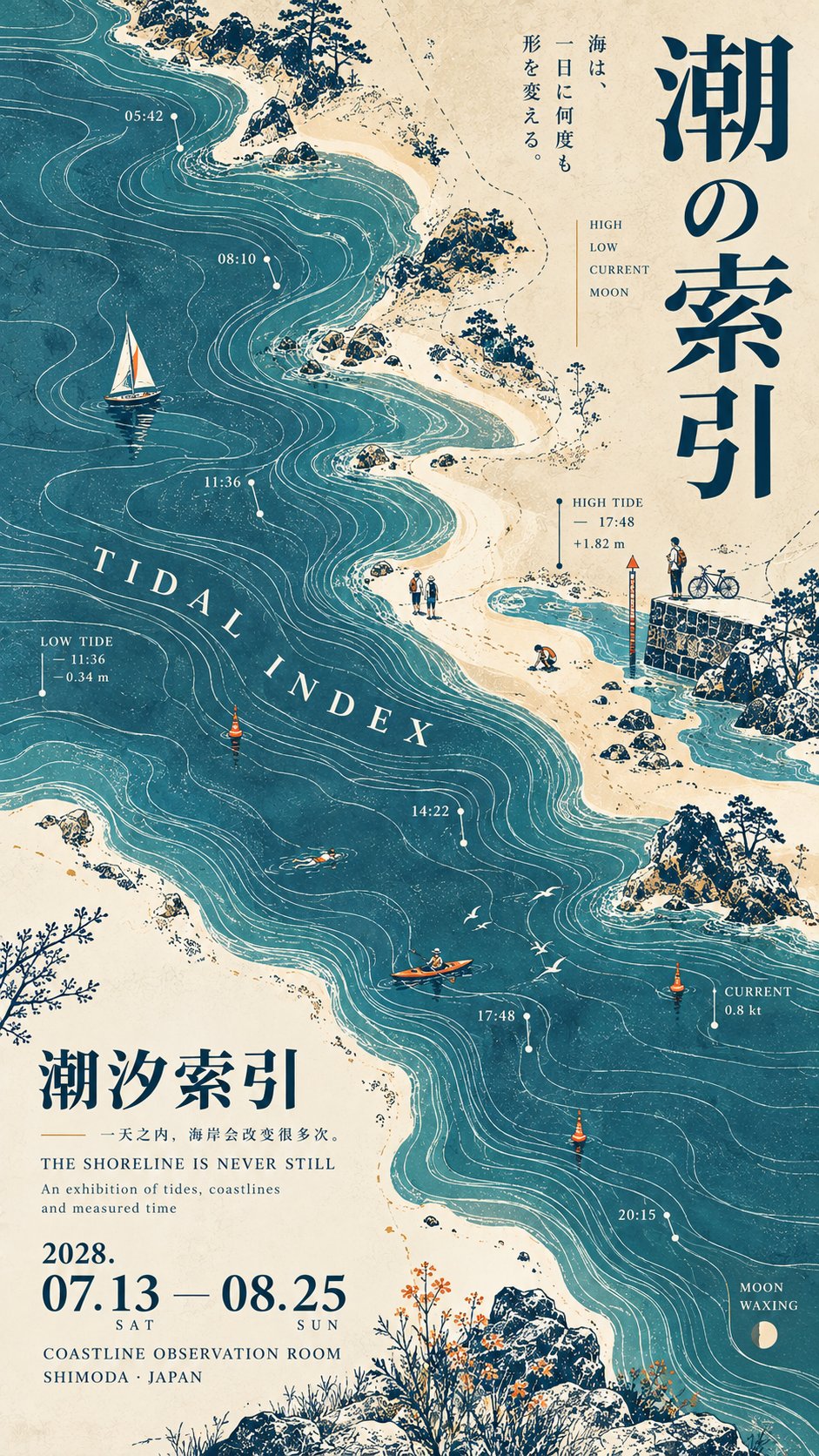
提示词
English
Observation Theme: [Fill in Theme]
Core Natural Object: [Fill in Object]
Main Observation Method: [Cross-section Structure / Periodic Change / Motion Trajectory / Natural Texture]
Main Title: [Fill in Title]
Main Color Tone: [Fill in Palette]
Exhibition Information: [Fill in Date, Location, etc.]

Create a 9:16 vertical Japanese-style natural observation art poster, merging natural history illustration, scientific infographics, vintage printing, and modern exhibition design. Let natural phenomena become visual works that possess both artistic beauty and observational value.

Greatly enlarge the core natural object to become the main visual focus of the frame. Choose a representation method such as cross-sections, cycles, flow trajectories, or morphological changes based on the theme to showcase the object's most recognizable features.

Around the main body, add local enlargements, observation nodes, fine line guides, scales, and structural annotations. Information should have a clear logical relationship, allowing the audience to understand the natural object along the reading path of the image.

The overall background uses a creamy white old paper, paired with a natural system main color palette and a few accent colors. Present a vintage natural field guide style through soft color layers, fine hand-drawn lines, and vintage printing grains.

The composition needs to balance large subjects with minute information, forming a clear scale contrast. Auxiliary graphics, recording lines, and explanatory text are naturally distributed along the main structure, maintaining the precise order characteristic of scientific field guides.

Typography combines large Chinese or Japanese titles, English subtitles, vertical explanations, and small observation labels. Text information needs to correspond to the theme, avoiding random insertion of meaningless scientific terms or fictional data.

Final image should simultaneously possess the rigor of natural observation, the visual impact of an art poster, and a mature sense of editorial design. Avoid common textbook-style layouts, mechanical chart stacking, and overly realistic commercial photography effects.
中文
观察主题:【填写主题】
核心自然对象:【填写对象】
主要观察方式:【剖面结构 / 周期变化 / 运动轨迹 / 自然纹理】
主标题:【填写标题】
主色调:【填写配色】
展览信息:【填写日期、地点等】

创作一张 9:16 竖版日式自然观察艺术海报,融合博物学插画、科学信息图、复古印刷与现代展览设计。让自然现象成为兼具艺术美感和观察价值的视觉作品。

将核心自然对象大幅放大,成为画面的主要视觉焦点。根据主题选择剖面、周期、流动轨迹或形态变化等表现方式,展示对象最具有辨识度的特征。

围绕主体加入局部放大、观察节点、细线引导、刻度和结构标注。信息应该有明确的逻辑关系,让观众能够沿着画面的阅读路径理解自然对象。

整体采用米白色旧纸背景,搭配自然系主色调和少量强调色。通过柔和的颜色层次、精细手绘线条与复古印刷颗粒,呈现具有年代感的自然图鉴风格。

构图需要兼顾大型主体与细小信息,形成明显的尺度反差。辅助图形、记录线和说明文字沿着主体结构自然分布,保持科学图鉴特有的精密秩序。

排版结合大型中文或日文标题、英文副标题、竖排说明及小型观察标签。文字信息需要与主题对应,避免随意填入没有意义的科学术语或虚构数据。

最终画面应同时具有自然观察的严谨感、艺术海报的视觉冲击和成熟的编辑设计感。避免普通教材式布局、机械图表堆叠及过度写实的商业摄影效果。