制作同一人物隐身显身双图对照照片
来源: @FromSummerF模型: ChatGPT
📸 示例图片
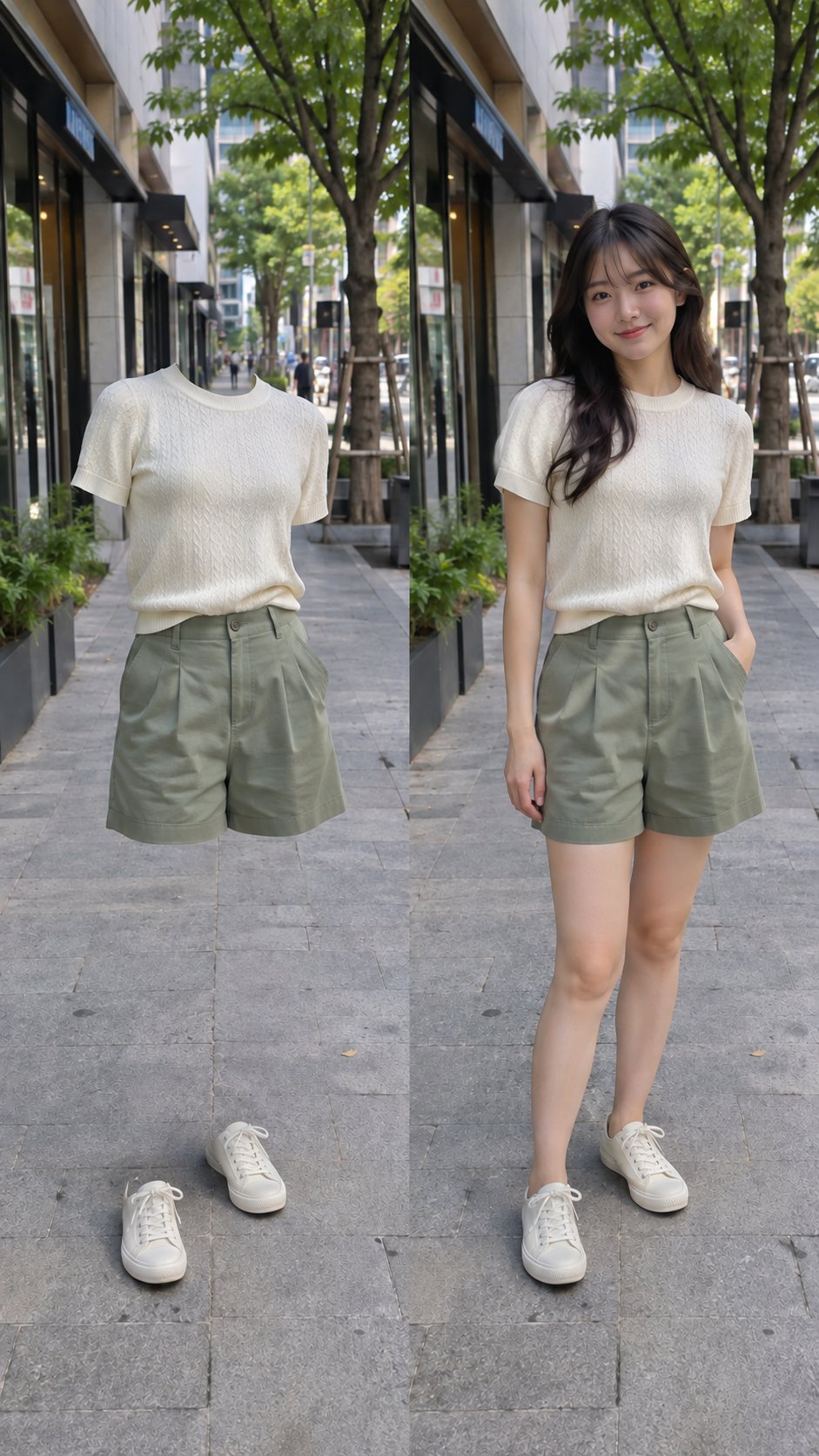
提示词
English
Create a 'invisible / visible' dual-photo comparison of the same character.

【Input Judgment】

1. When the user uploads a photo of a person:
Use the photo uploaded by the user as the original visible image, preserving the person's identity, facial features, hairstyle, body shape, posture, clothing, shoes, accessories, shooting angle, background, and lighting.
Create an invisible version based on that photo, without redesigning the character or changing the clothing.
Prioritize maintaining the original image's framing. If the original is a half-body or partial photo, use the same framing on both sides, and do not arbitrarily supplement unappeared body parts, clothing, or shoes.
When the user has specific modification requests, first complete the modified original visible image, then create the corresponding invisible version.

2. When the user has not uploaded a photo:
The AI first designs and generates an original visible image, then creates an invisible version based on that same original image.
The default character is a 20-year-old adult Asian female, with a slender figure, small frame, natural features, and a relaxed, playful expression.
The AI designs a coordinated, realistic daily outfit suitable for Asian city streets, including top, bottom, and shoes. The clothing features clear materials, silhouettes, stitching, and folds, with the top having non-see-through main fabric or lining.
Default posture: facing the camera, body slightly turned about 15 degrees, weight on one leg, the other foot naturally forward, one hand in a pocket, and the other hand hanging naturally.
User-specified character, clothing, scene, posture, and photography requirements take precedence over default settings.

【Default Photography & Environment】

Hyper-realistic Asian city street photography.
Realistic commercial street, storefront windows, trees, floor tiles, and an appropriate amount of distant city details.
iPhone 26mm main lens, 1x field of view, natural HDR, soft afternoon natural light, slight mobile phone noise.
Natural character proportions, realistic textures for skin, fabric, shoe surfaces, and the environment, with moderate background bokeh.
When no photo is uploaded, use a full-body composition, leaving appropriate space above the head, with shoes fully in frame, and appropriate sidewalk space below the feet.
When a photo is uploaded, follow the original image's composition and photography characteristics.

【Production Sequence】

Step 1: Determine the final original visible image.
Step 2: Duplicate that original image and perform invisibility processing only on the human body within it to obtain the invisible version.
Step 3: Stitch the invisible version and the original visible image side-by-side.

Both sides should originate from the same base photo, without separately re-generating the character, clothing, posture, or background.

【Invisibility Rules】

The head, face, hair, neck, torso, arms, hands, all fingers, legs, and feet of the character on the invisible side must be 100% invisible.

All areas originally obscured by the human body and not covered by clothing or accessories must be filled in with a continuous, natural, and perspectively correct background based on the surrounding scene.
This includes the area after the head and hair disappear, near the neckline and cuffs, where the arms and hands were located, the exposed waist, legs, and above the shoe openings.

Background completion must conform to the original image's architectural structure, floor tile direction, depth of field, lighting, and textures.
If the arms, palms, or hair originally covered clothing, the corresponding fabric, stitching, and folds of the clothing should be completed.
Complete the background or clothing separately based on occlusion relationships, without using uniform color blocks.

Do not show glass bodies, translucent bodies, human outlines, refractions, glowing edges, human-shaped masks, white holes, or black holes.

【Clothing, Shoes, and Accessories Retention Rules】

All clothing, shoes, and accessories remain visible, preserving their position, size, angle, style, color, material, and wearing state from the original visible image.

Tops:
Maintain the original shoulder lines, sleeve types, necklines, hemlines, as well as fabric tension and folds at the chest and waist.
The clothes should be naturally propped up, maintaining their original wearing state.
No skin, hair, neck cross-sections, arm cross-sections, or mannequin fillers should remain at the neckline, cuffs, or other openings.
Especially check the inside of the neckline; no skin-colored neck rings or flesh-colored thin slices should remain.

Bottoms:
Maintain the original waist and hip shape, trouser leg or skirt hem form, stitching, folds, and drape.
If a hand is in a pocket, preserve the original pocket's stress deformation, but the hand, fingers, and arm must be completely invisible.

Shoes:
Maintain the original ground position, orientation, size, laces, tongue, and upper shape.
Shoes should land normally with realistic contact shadows.
No feet, ankles, calves, or body cross-sections should appear inside or above the shoe openings.

Accessories:
Retain the existing accessories from the original image and their wearing positions, without adding extra ones.

Transparent fabrics:
Lace, mesh, and other fabrics should retain their original fiber and pore structures.
Pores that originally showed skin should display the background or the original inner layer of clothing based on actual occlusion.
Do not arbitrarily change clothing styles, add linings, or fill in transparent structures to cover the human body.

No hangers, mannequins, stands, or other supports.
Clothing should not collapse, shift, or become flattened or taken off.

【Lighting & Shadows】

Maintain the same exposure, color temperature, light direction, and shadow hardness on both sides.
The invisible side should retain reasonable projections and contact shadows generated by the visible clothing, shoes, and accessories.
Remove shadows generated by the disappearing human body and hair, including corresponding shadows on the background or clothing.
Do not retain full human-shaped shadows.

【Final Layout】

Final output is a vertical 9:16 image, consisting of two independent photos stitched side-by-side, each occupying 50%.

Left image: The photo after invisibility processing.
Right image: The corresponding original visible image.

Both photos use the same framing, camera position, proportions, and character placement.
The height, shape, folds of clothing, and position of shoes on both sides should correspond as accurately as possible.
Each side has a complete and mutually corresponding background, with a direct stitching boundary in the center.
The background appears repeatedly on both sides, clearly showing the comparison effect before and after processing the same photo.

The background can be moderately extended to fit the layout.
Do not stretch characters, change body proportions, or crop out clothing or shoes that need to be retained.
Do not put two people into the same continuous street scene.
Do not add text, labels, titles, watermarks, decorative borders, or wide dividers.

【Pre-delivery Check】

Confirm that no visible human body, hair, or skin color residue exists on the left side, especially checking the neckline, cuffs, pockets, bottom openings, and shoe openings.
Confirm that clothing, shoes, accessories, posture, proportions, and positions on both sides correspond to each other.
Confirm that the background completion in the invisible area is continuous and natural, and the clothing occlusion relationships are correct.
Confirm that the shoes land normally and the clothing maintains its natural wearing form.
Confirm the final result is a dual-photo stitching effect with invisible on the left and visible on the right.

【Negative Prompt】

Visible human body on the invisible side, skin, face, hair, neck residue, skin-colored neck ring, flesh-colored filling, fingers, arms, legs, feet, body cross-sections, human outlines, glass person, translucent body, refraction, glowing edges, human-shaped shadow, white hole, black hole, broken background, clothing completion error, clothing change, clothing position drift, inconsistent folds on both sides, shoe style change, floating shoes, collapsed clothing, hangers, mannequins, supports, extra clothing, extra characters, extra limbs, different postures on both sides, distorted proportions, two people in a shared continuous street scene, text, labels, watermarks, decorative borders, illustrations, cartoons, CGI, plastic texture.
中文
制作同一人物的“隐身/显身”双图对照照片。

【输入判断】

1. 用户上传人物照片时:
以用户上传的照片作为显身原图,保留人物身份、面貌、发型、身形、姿态、服装、鞋子、配饰、拍摄视角、背景和光线。
基于该照片制作隐身版本,不重新设计人物,不更换服装。
优先保持原图取景范围。若原图为半身或局部照片,两侧沿用相同取景,不擅自补造未出现的身体、服装或鞋子。
用户另有明确修改要求时,先完成修改后的显身原图,再制作对应的隐身版本。

2. 用户未上传照片时:
由 AI 先设计并生成一张显身原图,再基于同一张原图制作隐身版本。
默认人物为一位20岁成年亚洲女性,身材纤细、骨架小,面貌自然,神情轻松俏皮。
由 AI 设计一套协调、真实、适合亚洲城市街头的日常穿搭,包含上装、下装和鞋子。服装具有清晰的材质、轮廓、缝线和褶皱,上装具有不透肤的主体面料或内衬。
默认姿态:正面朝向镜头,身体微转约15度,一腿承重,另一只脚自然向前,一只手插入口袋,另一只手自然下垂。
用户指定的人物、服装、场景、姿态及摄影要求优先于默认设置。

【默认摄影与环境】

超写实亚洲城市街头摄影。
真实商业街,店面橱窗、树木、地砖及适量远景城市细节。
iPhone 26mm主镜头,1倍视角,自然HDR,柔和午后自然光,轻微手机噪点。
人物比例自然,皮肤、布料、鞋面和环境具有真实纹理,背景适度柔焦。
未上传照片时采用全身构图,头顶留有适量空间,鞋子完整入镜,脚下留出适量人行道。
上传照片时以原图构图和摄影特征为准。

【制作顺序】

第一步:确定最终显身原图。
第二步:复制该原图,仅对其中的人体进行隐身处理,得到隐身版本。
第三步:将隐身版本与显身原图左右拼接。

两侧应来源于同一张基础照片,不分别重新生成人物、服装、姿态或背景。

【隐身处理规则】

隐身侧人物的头部、脸部、头发、颈部、躯干、双臂、双手、全部手指、双腿及双脚100%不可见。

所有原本被人体遮挡、且未被服装或配饰遮挡的区域,均根据周围场景补全为连续、自然、透视正确的背景。
包括头部和头发消失后的区域、领口与袖口附近、手臂与双手所在位置、裸露腰部、双腿以及鞋口上方。

背景补全须符合原图的建筑结构、地砖走向、景深、光线和纹理。
若手臂、手掌或头发原本遮住衣物,应补全对应衣物的面料、缝线与褶皱。
根据遮挡关系分别补全背景或衣物,不用统一色块填充。

不出现玻璃人体、半透明身体、人体轮廓、折射、发光边缘、人形遮罩、白色空洞或黑色空洞。

【服装、鞋子与配饰保留规则】

全部服装、鞋子和配饰保持可见,保留显身原图中的位置、尺寸、角度、款式、颜色、材质及穿着形态。

上装:
保持原来的肩线、袖型、领口、衣摆,以及胸腰处的布料张力和褶皱。
衣服自然撑起,维持原有穿着状态。
领口、袖口和其他开口处不残留皮肤、头发、颈部截面、手臂截面或假人填充物。
尤其检查领口内侧,不得残留肤色颈圈或肉色薄片。

下装:
保持原来的腰臀形状、裤腿或裙摆形态、缝线、褶皱与垂坠感。
若手插入口袋,保留原来的口袋受力形变,但手、手指和手臂完全不可见。

鞋子:
保持原来的落地位置、朝向、大小、鞋带、鞋舌和鞋面形态。
鞋子正常落地,具有真实接触阴影。
鞋口内及鞋口上方不出现脚、脚踝、小腿或身体截面。

配饰:
保留原图已有配饰及其佩戴位置,不额外添加。

透空面料:
蕾丝、网眼等面料保留原有纤维和孔隙结构。
原本透出皮肤的孔隙,应依据实际遮挡关系显示背景或原有衣物内层。
不得为遮盖人体而擅自改变服装款式、增加内衬或填实透空结构。

不出现衣架、假人、支架或其他支撑物。
衣物不塌落、不移位、不变成摊平或脱下的状态。

【光线与阴影】

两侧保持相同的曝光、色温、光线方向和阴影软硬程度。
隐身侧保留可见服装、鞋子与配饰产生的合理投影和接触阴影。
移除消失的人体及头发产生的阴影,包括背景或衣物上的对应阴影。
不保留完整的人形影子。

【最终版式】

最终输出一张纵向9:16图片,由两张独立照片左右拼接,左右各占50%。

左图:隐身处理后的照片。
右图:对应的显身原图。

两张照片采用相同的取景、机位、比例和人物位置。
两侧服装的高度、形状、褶皱及鞋子位置尽量精确对应。
两侧分别拥有完整且相互对应的背景,中央为直接拼接边界。
背景在两侧重复出现,使画面明确呈现同一张照片处理前后的对照效果。

为适配版式,可适度扩展背景。
不拉伸人物,不改变身体比例,不裁掉需要保留的服装或鞋子。
不把两个人放进同一个连续街景。
不添加文字、标签、标题、水印、装饰边框或宽分隔条。

【交付前检查】

确认左侧不存在任何可见人体、头发或肤色残留,尤其检查领口、袖口、口袋、下装开口和鞋口。
确认两侧服装、鞋子、配饰、姿态、比例与位置相互对应。
确认隐身区域的背景补全连续自然,衣物遮挡关系正确。
确认鞋子正常落地,服装保持自然穿着形态。
确认最终为左隐身、右显身的双照片拼接效果。

【负面提示词】

隐身侧可见人体、皮肤、脸、头发、颈部残留、肤色颈圈、肉色填充、手指、手臂、腿、脚、身体截面、人体轮廓、玻璃人、半透明身体、折射、发光边缘、人形阴影、白色空洞、黑色空洞、背景断裂、衣物补全错误、服装改变、衣物位置漂移、两侧褶皱不一致、鞋子款式改变、鞋子悬空、衣物塌落、衣架、假人、支撑物、额外衣物、多余人物、多余肢体、两侧姿态不同、比例失真、共享连续街景中的两个人、文字、标签、水印、装饰边框、插画、卡通、CGI、塑料质感。