极简杂志风分屏手绘插画海报
来源: @harboriis模型: ChatGPT
📸 示例图片
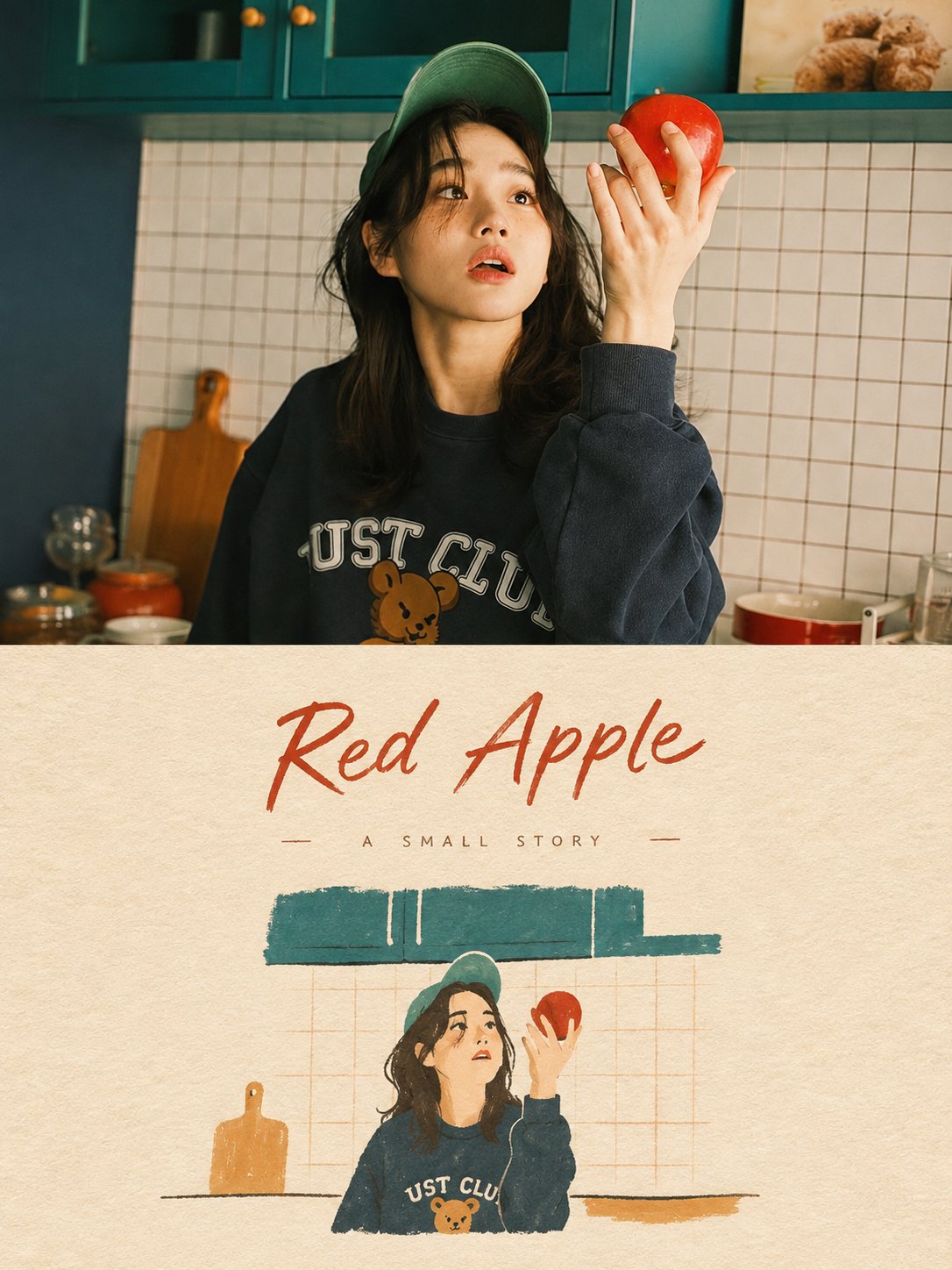
提示词
English
Transform the uploaded photos into an individual, high-end design poster. Do not combine multiple images; output each photo as a separate, standalone piece. Use a vertical {argument name="aspect ratio" default="3:4"} format, with the upper and lower sections divided strictly 1:1, each occupying 50% of the total composition.

The upper section should retain the original photograph—preserving its core structure, authentic texture, natural lighting, and original color atmosphere—while applying subtle, high-end photographic color grading to evoke the aesthetic of magazine photography or art publications. To fit the frame, you may naturally extend the sky, ground, or environmental background, provided that the main subject remains undistorted and unaltered.

The lower section should distill the most recognizable elements of the subject—its silhouette, posture, and narrative context—into a minimalist, hand-drawn, paper-textured cover illustration. Strip away complex details, retaining only the most essential visual features. Use delicate, slightly unsteady hand-drawn lines combined with a few distinct, flat-applied acrylic color blocks to represent the subject, ensuring it remains instantly identifiable. The subject should be small and concentrated—occupying approximately {argument name="subject proportion" default="10%–20%"} of the lower section—surrounded by ample negative space. The background should resemble rough or light-colored paper, with only minimal lines or color planes to suggest the environment.

The color palette should be derived from the original photo and condensed into no more than four primary colors. These color blocks should be bold, solid, and restrained, incorporating textures like paper grain, visible brushstrokes, and slightly irregular edges. Lines should define the structure, while color blocks should establish the subject. Avoid styles such as colored pencil, crayon, watercolor washes, pure line art, complex realism, heavy oil-painting textures, slick digital illustrations, or 3D-rendered effects.

You may incorporate a small amount of concise text—such as titles, keywords, subject names, locations, years, serial numbers, or short phrases—tailored to the content of each photo (not limited to urban themes). The typography should be sparse and restrained, blending naturally with the negative space and illustration to evoke the aesthetic of an art book cover, an independent publication, or a children’s picture book.  The overall visual aesthetic features small subjects, ample negative space, a high degree of distillation, and strong recognizability. It conveys a sense of tranquility, childlike charm, and ease—evoking a poetic, sophisticated quality while steering clear of the look typical of commercial cartoons, e-commerce imagery, or generic templates.
中文
将上传的照片转换为独立的高级设计海报。不要合并多张图像;将每张照片输出为独立、单件的作品。使用垂直的 {argument name="aspect ratio" default="3:4"} 格式,上下部分严格按 1:1 划分,各占总构图的 50%。

上半部分应保留原始照片——保留其核心结构、真实质感、自然光线和原始色彩氛围——同时应用微妙、高级的摄影调色,以唤起杂志摄影或艺术出版物的美感。为了适应画框,你可以自然地延伸天空、地面或环境背景,前提是主体保持不失真且不改变。

下半部分应将主体最易辨识的元素——其剪影、姿态和叙事语境——提炼成极简的、手绘的、具有纸质质感的封面插图。剥离复杂的细节,仅保留最核心的视觉特征。使用精致、略显不稳的手绘线条,结合几个明显的、平涂的丙烯色块来表现主体,确保其仍能被瞬间识别。主体应当小而集中——占据下半部分约 {argument name="subject proportion" default="10%–20%"} 的比例——周围环绕着充足的留白。背景应类似于粗糙或浅色的纸张,仅用极简的线条或色块来暗示环境。

调色板应取自原始照片,并浓缩为不超过四种的主色。这些色块应当是大胆、扎实且克制的,融入纸张纹理、可见的笔触和略微不规则的边缘。线条应界定结构,而色块应建立主体。避免使用彩色铅笔、蜡笔、水彩晕染、纯线稿、复杂写实、沉重的油画纹理、光滑的数字插图或 3D 渲染效果等风格。

你可以加入少量的简洁文字——如标题、关键词、主体名称、地点、年份、序列号或短语——根据每张照片的内容量身定制(不限于城市主题)。排版应当稀疏且克制,自然地融入留白和插图,以唤起艺术书籍封面、独立出版物或儿童绘本的美感。整体视觉美学特征为小主体、充足的留白、高度的提炼和极强的辨识度。它传达出一种宁静、童趣和自在感——唤起一种诗意、高级的质感,同时避开典型的商业卡通、电商图像或通用模板的外观。