桌面城市虚实结合创意海报
来源: @MrLarus模型: ChatGPT
📸 示例图片
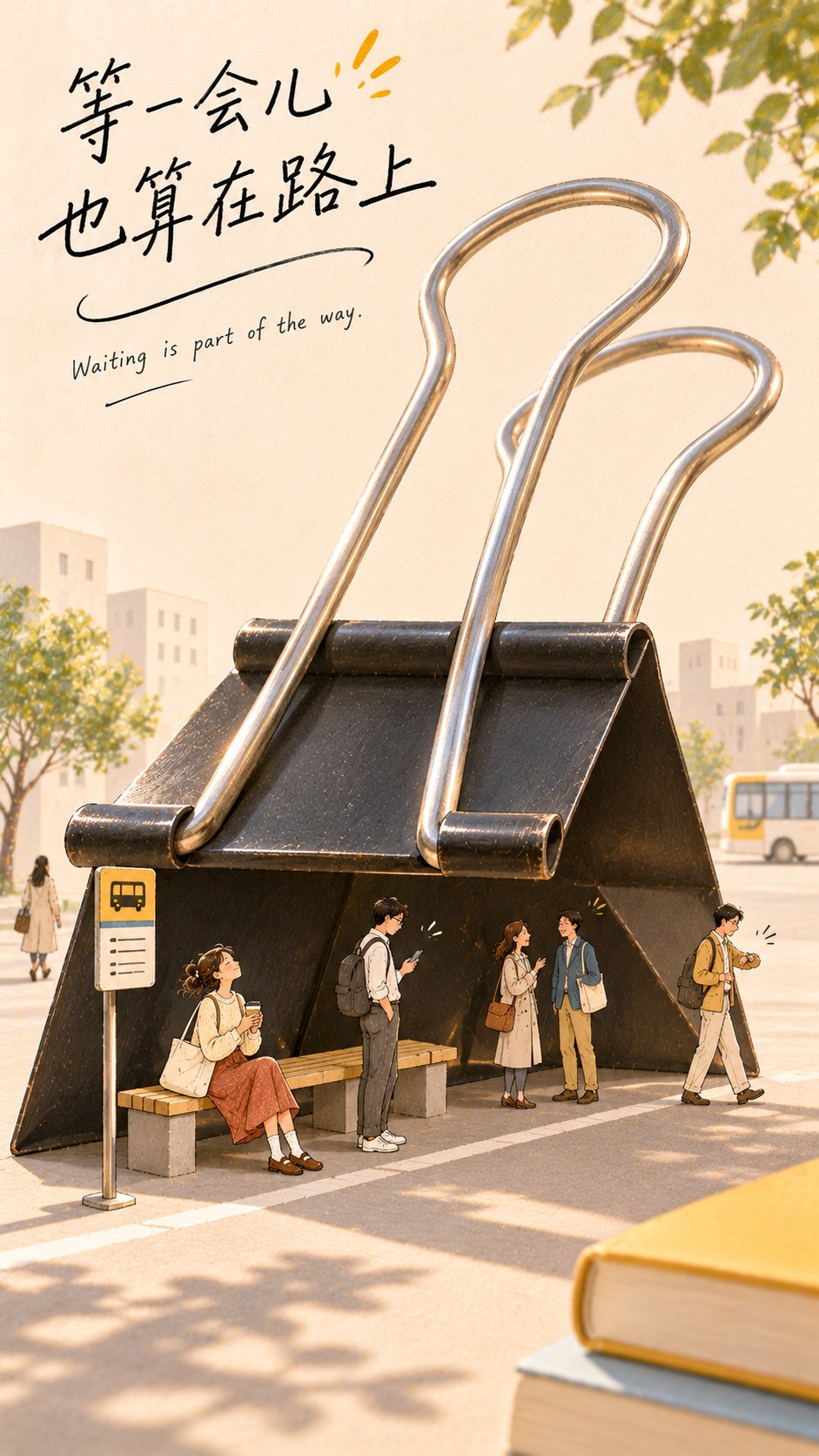
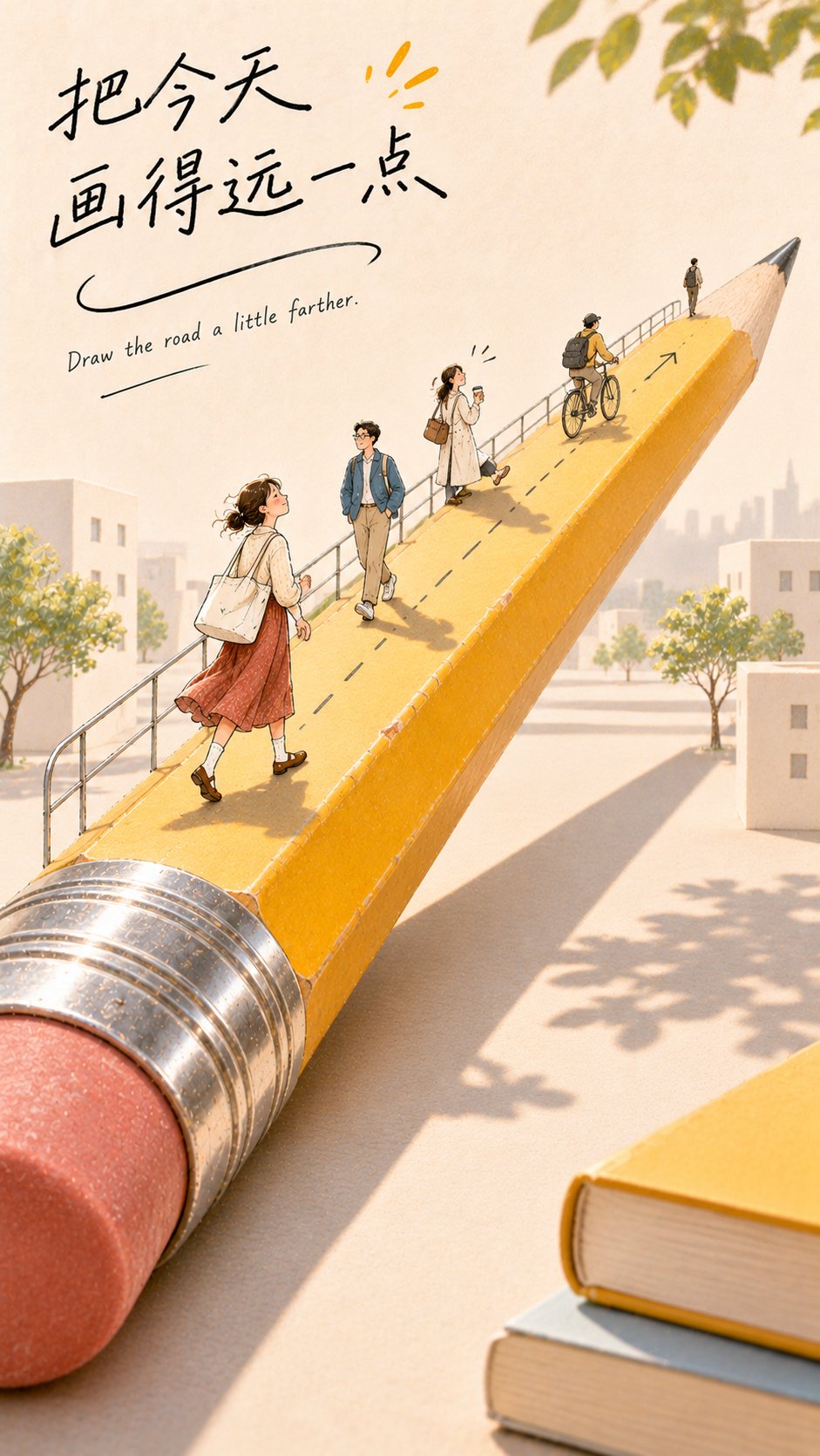
提示词
English
[Core Real Object]: {Paperclip / Pencil / Tape / Bulldog Clip / Other daily objects}
[Urban Function]: {Pedestrian Bridge / Tunnel / Station / Walkway / Park / Building, etc.}
[Character Action]: {Commuting / Waiting for bus / Biking / Drinking coffee / Checking phone / Talking, etc.}
[Main Copy]: {A short, visually evocative Chinese sentence}
[Accent Color]: {Yellow / Brick Red / Navy Blue / Others}
[Aspect Ratio]: {Default 9:16}

Create a "Desk City" reality-fiction combined creative poster.

Magnify the [Core Real Object] dozens of times, completely preserving its original familiar real structure, proportions, and photography-grade material; do not redesign it into a common building. Utilize its own form to let it naturally assume the [Urban Function]: the object remains recognizable at a glance, but miniature figures are already using it as normal urban infrastructure.

The core object adopts highly realistic product photography quality, expressing real materials, textures, weight, edges, slight signs of use, natural highlights, and shadows. Avoid plastic CGI, excessive specular highlights, glass, transparent refraction, and sci-fi textures.

Add 4–7 miniature hand-drawn adult urban figures to form a clear scale contrast with the giant real object. Figures use black and gray pencil outlines, with a small amount of colored pencil and crayon filling, simple facial features, natural proportions, wearing low-saturation commuting clothes such as off-white, navy blue, brick red, and caramel brown.

Figures must actually use this giant object: walking on it, passing through it, waiting, biking, resting, or talking, rather than simply standing next to it. Figures do not look at the camera, with natural and life-like actions, making the absurd giant object setting look like just another ordinary day in the city.

The environment adopts a minimalist "Desk City / Architectural Model" language, retaining only a small amount of off-white geometric buildings, small trees, road markings, and necessary facilities. The background uses large areas of warm cream white, light beige gray, and paper texture to actively reduce information density, making the real giant object the absolute visual anchor.

The composition emphasizes "one strong shape + miniature figures + large negative space." The core object must be large enough to be immediately identified even in thumbnail status, and form a clear Stop-scroll visual relationship through perspective, circular negative space, long axes, curves, or geometric blocks.

In the negative space, add the [Main Copy], using a natural, not perfectly regular Chinese handwritten font, like a life journal, architectural sketch, or picture book narration. A very small English side note can be added, but do not pile up a large amount of decorative text.

The overall lighting uses soft natural daylight or warm afternoon light, allowing the real object, hand-drawn figures, and environment to share the same set of shadows and spatial relationships, making the photography material and hand-drawn outlines truly merge into the same world.

The final effect should simultaneously have:

The photographic texture of real objects, the sense of life in hand-drawn figures, the realistic dislocation brought by giant scales, the fun of desktop miniature cities, and the complete design sense of an editorial poster.

Recognize the familiar real object at first glance, and only at second glance discover that the hand-drawn small people have actually turned it into a city.

Avoid: glass, transparent materials, refraction, pure photography figures, pure hand-drawn core objects, completely transforming the original object into an ordinary building, complex cities, future sci-fi, neon lights, large numbers of small people, meaningless English, and information overload.
中文
【核心真实物体】:{回形针 / 铅笔 / 胶带 / 长尾夹 / 其他日常物件}
【城市功能】:{天桥 / 隧道 / 车站 / 步道 / 公园 / 建筑等}
【人物动作】:{通勤 / 等车 / 骑车 / 喝咖啡 / 看手机 / 交谈等}
【主文案】:{一句简短、有画面感的中文短句}
【强调色】:{黄色 / 砖红 / 藏蓝 / 其他}
【画幅比例】:{默认 9:16}

创作一张「Desk City|桌面城市」虚实结合创意海报。

将【核心真实物体】放大几十倍,完整保留它原本熟悉的真实结构、比例和摄影级材质,不要重新设计成普通建筑。利用它本身的形态,让它自然承担【城市功能】:物体仍然一眼可辨,但微型人物已经把它当作城市基础设施正常使用。

核心物体采用高度写实的产品摄影质感,表现真实材质、纹理、重量、边缘、轻微使用痕迹、自然高光和投影。避免塑料 CGI、过度镜面、玻璃、透明折射和科幻质感。

加入 4–7 位微型手绘成年都市人物,与巨大真实物体形成明显尺度反差。人物使用黑灰铅笔线稿、少量彩铅和蜡笔填色,五官简洁、比例自然,穿米白、藏蓝、砖红、焦糖棕等低饱和通勤服装。

人物必须真实使用这个巨大物体:在上面行走、穿过、等待、骑车、休息或交谈,而不是简单站在旁边。人物不看镜头,动作自然生活化,让荒诞的巨物设定看起来像城市里再普通不过的一天。

环境采用极简「桌面城市 / 建筑模型」语言,只保留少量米白几何建筑、小树、道路标记和必要设施。背景大面积使用暖奶油白、浅米灰和纸张质感,主动降低信息密度,让真实巨物成为绝对视觉锚点。

构图强调「一个强大形 + 微型人物 + 大留白」。核心物体必须足够大,在缩略图状态下也能立即识别,并通过透视、圆形负空间、长轴、曲线或几何体块形成清楚的 Stop-scroll 视觉关系。

在留白区域加入【主文案】,使用自然、不完全规整的中文手写字体,像生活手账、建筑草图或绘本旁白。可以增加一句很小的英文旁注,但不要堆放大量装饰文字。

整体光线使用柔和自然日光或暖调午后光,让真实物体、手绘人物和环境共享同一套阴影与空间关系,使摄影材质和手绘线稿真正融合在同一个世界里。

最终效果应同时具有:

真实物体的摄影质感、手绘人物的生活感、巨大尺度带来的现实错位、桌面微缩城市的趣味,以及编辑海报的完整设计感。

第一眼认出熟悉的真实物件,第二眼才发现手绘小人竟然已经把它变成了一座城市。

避免:玻璃、透明材质、折射、纯摄影人物、纯手绘核心物体、把原物完全改造成普通建筑、复杂城市、未来科幻、霓虹灯、大量小人、无意义英文和信息过载。