当代东方人文艺术展览海报生成指令
来源: @MrLarus模型: ChatGPT
📸 示例图片
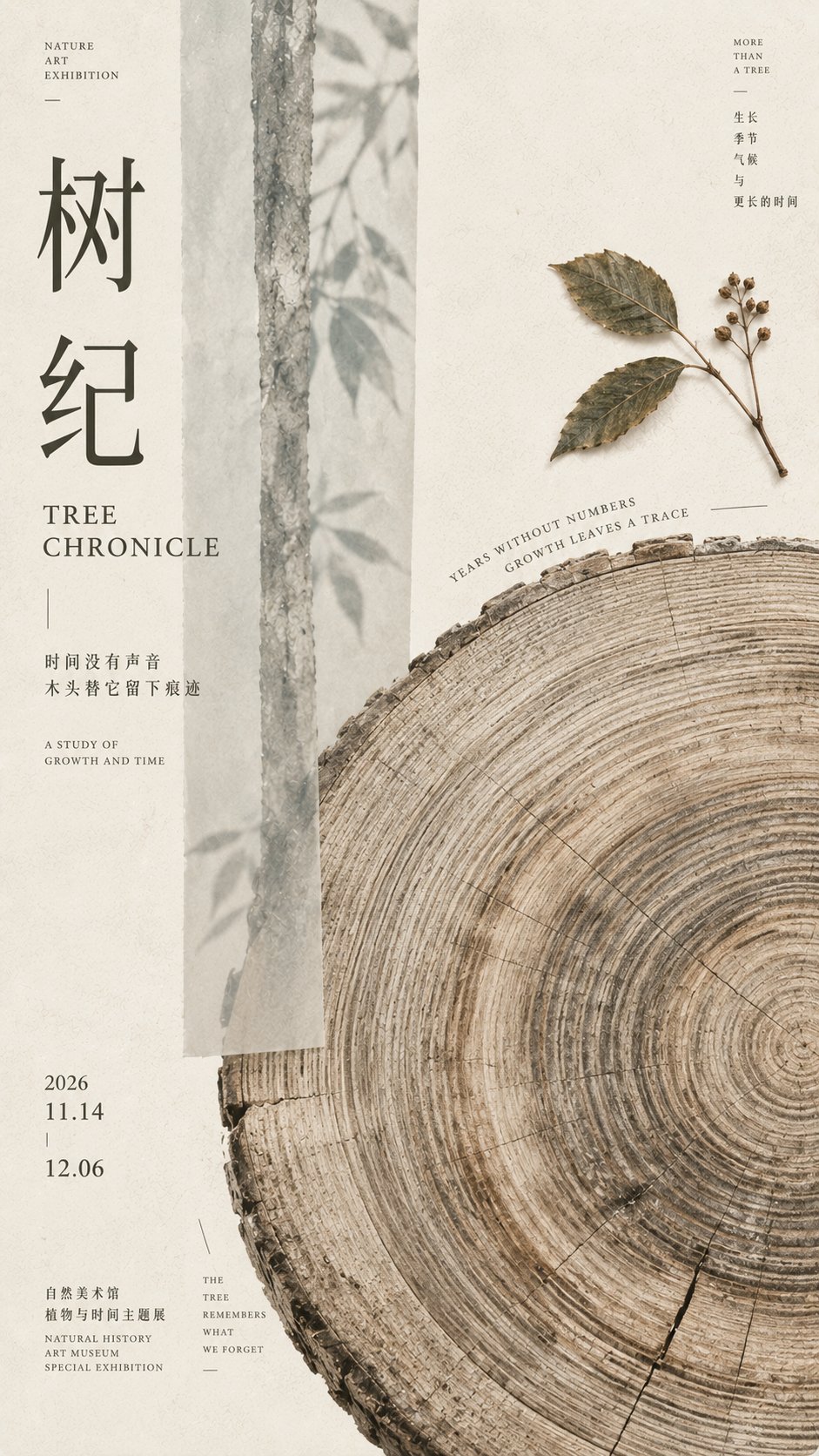
提示词
English
[Subject]: Fill in the subject, such as Tree Annals, Rain Sequence, Vessel Language, Paper Space
[Chinese Title]: Fill in 2–4 characters
[English Title]: Fill in the English title
[Main Visual Right-Bottom]: Fill in core natural or humanistic materials, such as annual rings, pottery, handmade paper sheets, water-surface vessels
[Middle Vertical Element]: Fill in translucent paper, tulle, rain curtain, plant shadows, blurred hand movements, etc.
[Archive Object Top-Right]: Fill in small real objects like plant specimens, pottery shards, stones, paper fragments, etc.
[Subject Slogan]: Fill in a short sentence about time, material, memory, or people
[Main Color Tone]: Fill in low-saturation natural colors, default warm ivory rice white, taupe, light ocher, gray-green, ink brown
[Aspect Ratio]: 9:16

Generate a contemporary Eastern humanistic art exhibition poster, overall blending Eastern natural aesthetics, material archives, independent art magazines, and modern Editorial Design. The image is quiet, restrained, and elegant, with a clear sense of paper and humanistic temperament, not doing traditional national trend, nor doing commercial advertising posters.

Strictly maintain a fixed layout structure: Place a clearly enlarged [Main Visual Right-Bottom] in the bottom right corner of the image, about 50%–60%, the subject must be naturally cropped by the right side or the bottom, forming a strong large-scale visual anchor; add a [Middle Vertical Element] hanging from the top on the middle-left side, about 20%–25% of the image width, keep it translucent, low contrast, and material-oriented, inside which plant, hand shadow, texture, text traces, or natural marks can vaguely appear, but cannot overpower the main visual.

The left side of the image retains a large area of warm rice white blank space, vertically arranging [Chinese Title], using slender, elongated modern Songti or high-end Chinese Serif with Eastern skeletons, not using huge brush calligraphy. Below the Chinese title, add [English Title], using elegant and slender English Serif Typography, and add a small number of subject slogans and extremely small editorial information.

The top-left, top-right, and bottom-left form a fixed small information system: the top-left puts series identity or exhibition category; the top-right puts a very small [Archive Object Top-Right] and 2–3 extremely small English keywords; the bottom-left puts date, venue, or exhibition description. Small characters only bear editorial texture, do not fill the screen, and do not generate a large amount of meaningless English.

Background uses clean and warm ivory rice white high-end art paper, only retaining slight natural paper fibers, fine particles, and Offset Print printing texture. The overall color scheme adopts [Main Color Tone], low saturation, soft, and matte, not using pure black and white, high saturation gradients, or commercial bright colors.

Real materials must retain clear tactile sense, such as wood grain, paper fiber, pottery clay spiral patterns, water ripples, plant leaf veins, fabric textures, or stone surfaces, but do not over-sharpen, HDR, or CGI. Seen from afar, the image relies on 'Left Title + Middle Vertical Structure + Right-Bottom Huge Main Visual' to hold up; only when looking closely do you gradually discover material details, small archive objects, and micro-text.

The final effect should be like an Eastern humanistic exhibition poster that truly exists in contemporary art museums, cultural institutions, or independent art publications, so that each work has a clear theme and meaning, rather than a templated placeholder design.
中文
【主题】:填写主题,例如树纪、雨序、器语、纸间
【中文标题】:填写 2–4 个字
【英文标题】:填写英文标题
【右下主视觉】:填写核心自然或人文材料,例如年轮、陶器、手工纸页、水面器皿
【中部垂直元素】:填写半透明纸、薄纱、雨幕、植物影、手部动作残影等
【右上档案物】:填写植物标本、陶片、石头、纸张碎片等小型真实物件
【主题短句】:填写一句关于时间、材料、记忆或人的短句
【主色调】:填写低饱和自然色,默认暖象牙米白、灰褐、浅赭、灰绿、墨褐
【画幅比例】:9:16

生成一张当代东方人文艺术展览海报,整体融合东方自然美学、材料档案、独立艺术杂志与现代 Editorial Design。画面安静、克制、优雅,有明显纸本感和人文气质,不做传统国潮,也不做商业广告海报。

严格保持固定版式结构:画面右下角放置一个被明显放大的【右下主视觉】,约占画面 50%–60%,主体必须被右侧或底部自然裁切,形成强烈的大尺度视觉锚点;画面中间偏左加入一条从顶部垂下的【中部垂直元素】,约占画面宽度 20%–25%,保持半透明、低对比和材料感,内部可以隐约出现植物、手影、纹理、文字残痕或自然痕迹,但不能抢过主视觉。

画面左侧保留大面积暖米白留白,纵向排列【中文标题】,使用纤细、修长、具有东方骨架的现代宋体或高级中文 Serif,不使用巨大毛笔书法。中文标题下方加入【英文标题】,使用优雅纤细的英文 Serif Typography,并加入少量主题短句和极小型编辑信息。

左上、右上、左下形成固定的小型信息系统:左上放系列身份或展览类别;右上放一个非常小的【右上档案物】以及 2–3 个极小英文关键词;左下放日期、场馆或展览说明。小字只承担编辑纹理,不要塞满画面,不生成大量无意义英文。

背景使用干净温润的象牙米白高级艺术纸,只保留轻微天然纸纤维、细颗粒和 Offset Print 印刷质感。整体配色采用【主色调】,低饱和、柔和、哑光,不使用纯黑纯白、高饱和渐变或商业亮色。

真实材料必须保留清楚的触感,例如木纹、纸纤维、陶土旋纹、水纹、植物叶脉、布料纹理或石头表面,但不要过度锐化、HDR 或 CGI。画面远看依靠“左侧标题 + 中部垂直结构 + 右下巨大主视觉”成立,近看才逐渐发现材料细节、小型档案物和微型文字。

最终效果应像真正存在于当代艺术馆、文化机构或独立艺术出版物中的东方人文展览海报,让每张作品都有明确主题和意义,而不是模板化占位设计。