当代地标建筑艺术社论海报
来源: @Naiknelofar788模型: ChatGPT
📸 示例图片
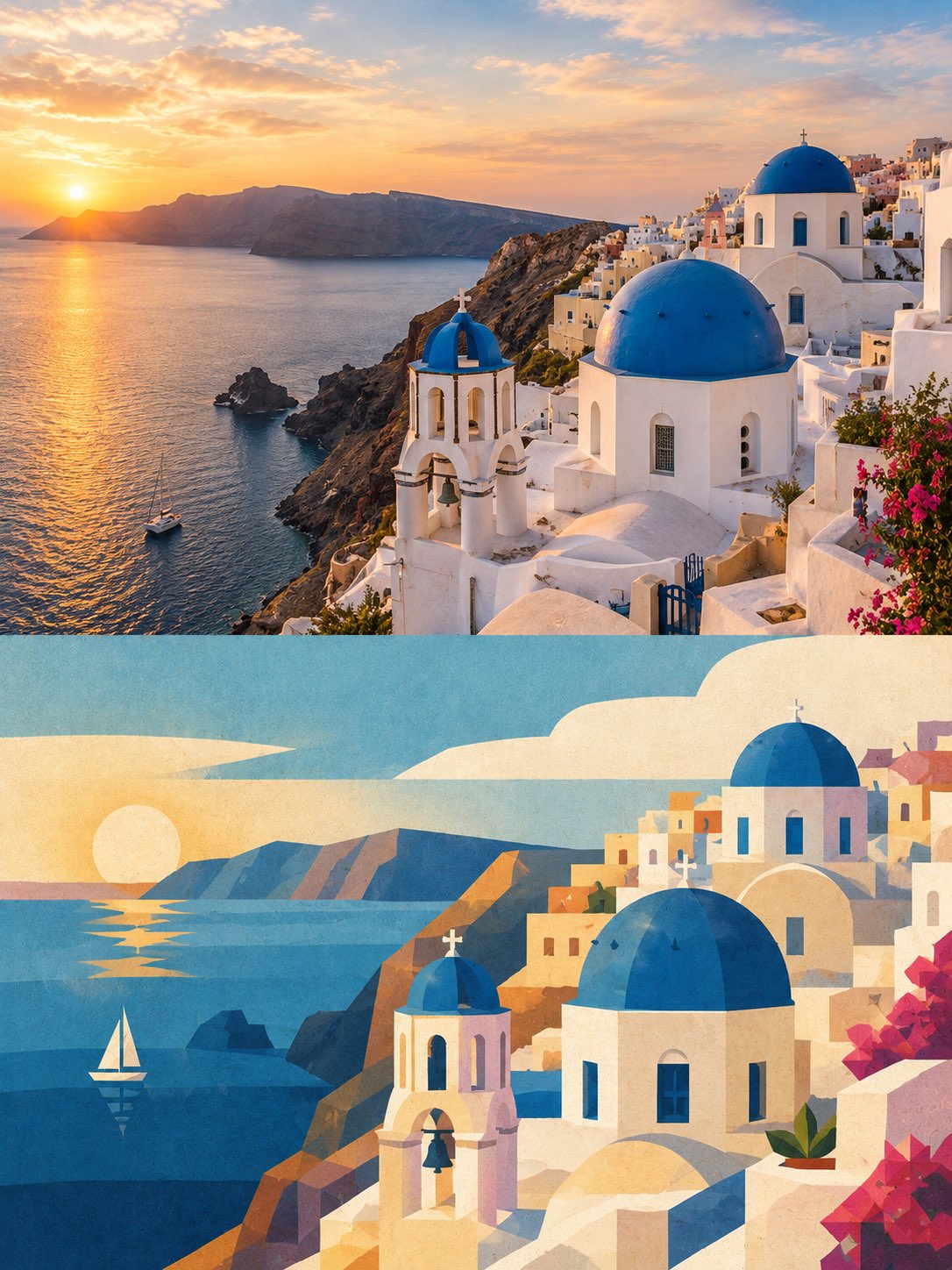
提示词
English
Create a premium contemporary editorial poster for [LANDMARK NAME], [CITY], [COUNTRY], using the uploaded photograph of the landmark as the primary visual reference.
FORMAT AND COMPOSITION
Vertical 3:4 portrait poster, divided into two perfectly equal horizontal sections. The upper half occupies exactly 50% of the total height, and the lower half occupies the remaining 50%. Both sections must have equal heights, with a precise horizontal division at the center.
UPPER HALF — ORIGINAL PHOTOGRAPH
Preserve the original landmark photograph as faithfully as possible. Maintain the landmark’s authentic architectural identity, silhouette, proportions, distinctive structures, windows, arches, columns, rooflines, materials, and characteristic colors. Retain the original lighting, natural shadows, surface textures, perspective, and surrounding environment.
Apply subtle art-magazine color grading with refined tonal contrast, sophisticated color balance, and a contemporary fine-art photography aesthetic. If necessary, extend the background naturally to achieve the portrait composition without stretching, distorting, replacing, or altering the landmark. The photograph should feel authentic, timeless, and editorial rather than artificially enhanced.
LOWER HALF — GEOMETRIC ARCHITECTURAL ABSTRACTION
Reinterpret the same landmark as a sophisticated modular geometric illustration. Translate its most recognizable architectural features into bold, simplified geometric structures while maintaining an unmistakable visual connection to the photograph above.
Construct the illustration using large rectangles, squares, rounded squares, circles, triangles, arches, and carefully composed irregular geometric forms. Recreate the landmark’s distinctive silhouette, structural rhythm, architectural proportions, and recognizable details through overlapping blocks, layered planes, simplified facades, and carefully balanced shapes.
Avoid excessive fragmentation, tiny geometric pieces, photorealistic rendering, and generic architectural symbols. Favor fewer, larger, cohesive forms with deliberate spacing and strong compositional structure. Preserve the landmark’s unique identity rather than turning it into an interchangeable building.
COLOR AND MATERIAL LANGUAGE
Develop the illustration’s palette from the original photograph and the visual character of [COUNTRY]. Use a restrained, harmonious combination of architectural neutrals, muted heritage tones, earthy pigments, and carefully selected accent colors.
Introduce subtle paper grain, matte printed surfaces, delicate screen-print textures, and refined color overlays. Maintain a sophisticated balance between flat geometric shapes and tactile printed materials.
EDITORIAL ART DIRECTION
Create the visual quality of a collectible architecture-art exhibition poster designed for a prestigious independent art magazine. Emphasize architectural rhythm, negative space, geometric balance, precise alignment, and visual continuity between the photographic and illustrated halves.
The upper photograph and lower illustration must depict the same landmark from a consistent visual perspective wherever possible. Align major contours, dominant verticals, recognizable towers, rooflines, or other signature features across the central division to strengthen the relationship between the two halves.
The result should feel artistic, architectural, culturally distinctive, contemporary, and suitable for a high-quality art print.
STRICT RESTRICTIONS
No text, typography, letters, words, numbers, captions, slogans, logos, watermarks, signatures, labels, borders, or graphic lettering anywhere in the image. Do not add flags, decorative national symbols, or unrelated landmarks unless they are present in the original photograph. Do not modify the landmark’s authentic identity. Do not merge multiple photographs. Produce one complete, independent poster from the supplied photograph.
中文
为 [地标名称]、[城市]、[国家] 创作一张高级当代社论海报,使用上传的地标照片作为主要视觉参考。
格式与构图
3:4 纵向肖像海报,分为两个完全相等的水平部分。上半部分占据总高度的 50%,下半部分占据剩余的 50%。两个部分的高度必须相等,中心有精确的水平分割。
上半部分 — 原始照片
尽可能忠实地保留原始地标照片。保持地标真实的建筑身份、轮廓、比例、独特结构、窗户、拱门、柱子、屋顶线、材料和特征颜色。保留原始光影、自然阴影、表面纹理、透视和周围环境。
应用微妙的艺术杂志色调评级,具有精致的色调对比、复杂的色彩平衡和当代美术摄影美学。如有必要,自然延伸背景以实现肖像构图,而无需拉伸、扭曲、替换或改变地标。照片应该感觉真实、永恒且具有社论感,而不是人工增强。
下半部分 — 几何建筑抽象
将同一地标重新诠释为复杂的模块化几何插图。将其最知名的建筑特征转化为大胆、简化的几何结构,同时与上方的照片保持明确的视觉联系。
使用大矩形、正方形、圆角正方形、圆形、三角形、拱门和精心组合的不规则几何形状来构建插图。通过重叠的方块、分层平面、简化的立面和精心平衡的形状,重建地标独特的轮廓、结构节奏、建筑比例和可识别的细节。
避免过度碎片化、微小的几何碎片、光致写实渲染和通用的建筑符号。倾向于更少、更大、有凝聚力的形式,具有深思熟虑的间距和强大的构图结构。保留地标的独特身份,而不是将其变成一个可互换的建筑。
颜色与材料语言
根据原始照片和 [国家] 的视觉特征开发插图的调色板。使用建筑中性色、柔和的遗产色调、大地颜料和精心挑选的点缀色的克制而和谐的组合。
引入微妙的纸张纹理、哑光印刷表面、精致的丝网印刷纹理和精致的色彩叠加。在扁平几何形状和触感印刷材料之间保持复杂的平衡。
社论艺术指导
打造为著名独立艺术杂志设计的收藏级建筑艺术展览海报的视觉品质。强调建筑节奏、负空间、几何平衡、精确对齐以及摄影与插图两部分之间的视觉连续性。
上半部分的摄影和下半部分的插图必须尽可能从一致的视觉透视描绘同一地标。沿中心分割线对齐主要轮廓、主导垂直线、可识别的塔楼、屋顶线或其他标志性特征,以加强两部分之间的关系。
结果应具有艺术感、建筑感、文化特色、现代感,并适合高质量的艺术印刷。
严格限制
图像中的任何地方都不得出现文字、排版、字母、单词、数字、标题、口号、徽标、水印、签名、标签、边框或图形字体。除非原始照片中存在,否则不要添加国旗、装饰性国家符号或无关的地标。不要修改地标的真实身份。不要合并多张照片。根据提供的照片制作一张完整的、独立的海报。