掐丝珐琅东方展览感海报生成
来源: @daaihq模型: ChatGPT
📸 示例图片
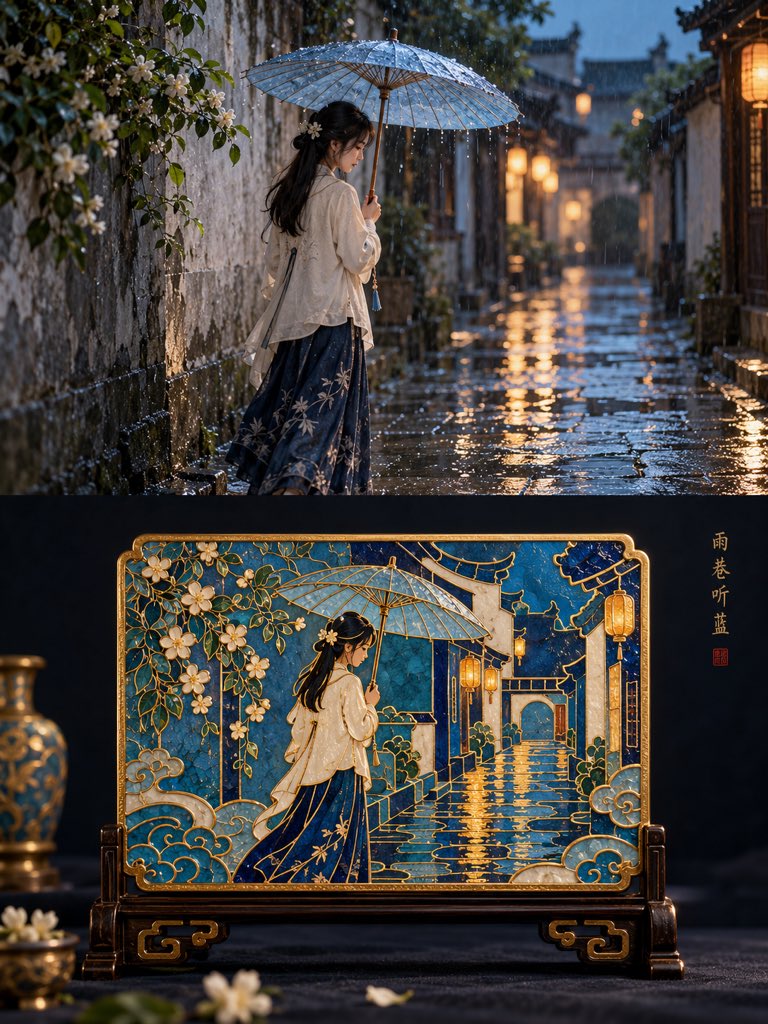
提示词
English
Please turn every photo I upload into a separate high-end design poster, no multi-image stitching, each photo output individually. The overall composition uses a 3:4 vertical orientation, with the upper and lower areas strictly at a 1:1 height ratio, each occupying 50% of the frame.

The upper part preserves the original photo, maintaining the subject's identity, structure, posture, real texture, natural light and shadow, and original color atmosphere, with only slight high-end color grading to give it an artistic photography and Oriental exhibition image texture. To adapt to the frame, the environment background can be naturally extended, but the subject must not be stretched, distorted, or changed.

The lower part extracts the most recognizable subject, silhouette, posture, and narrative relationship from the photo, reconstructing it as a decorative pattern on a traditional Chinese cloisonné (Jingtailan) object, presented on a warm bronze-based enamel table screen or a circular enamel plaque. Whether the original image is of a person, animal, building, plant, object, or landscape, it is understood as a "pattern that can be wired, dotted with blue, and fired": the silhouette and internal structure of the subject are outlined by narrow gilded copper wires, forming closed small cells (cloisons), with each cell filled with enamel glazes of different colors. The posture is taken from the most expressive moment in the original photo, as if permanently frozen beneath the glazed surface.

Do not use realistic depiction or cartoonization; instead, re-summarize using the stylistic grammar of cloisonné: linearized, flattened, and patterned, with gold wires outlining the silhouette, and traditional patterns such as interlocking lotus, fret patterns, ruyi clouds, and sea-and-cliff patterns as local decorations or background fillers. Retain the most recognizable features of the original object, so the viewer recognizes it at a glance, while feeling it was meticulously wired and fired by an old craftsman.

Craftsmanship and luster are the soul of this work: the gilded copper wires emit soft and clear golden highlights under the light, like a dense golden skeleton; the enamel glaze surface, after multiple firings and polishings, presents a glass-like warm translucent luster, with slight transitions in glaze color depth, tiny bubbles, and manual traces visible. The glaze color is based on the iconic peacock blue/azure blue of cloisonné, accented with coral red, sapphire blue, peacock green, ivory white, and goose yellow. A beam of side-lit warm light shines obliquely on the surface of the object, creating exquisite light and shadow undulations between the gold wires and the glaze, with soft reflections at the edges, like a treasure quietly displayed in a museum showcase.

The composition is centered around one object, one pattern, and ample negative space. The enamel plaque or table screen is placed against a dark background (such as deep indigo velvet, ebony lacquer, or warm ink-colored light field), with the surroundings naturally darkening; the main decorative pattern only occupies about 25%–35% of the frame, which can be off-center or located at the golden ratio position. Large areas of clean monochromatic glaze (such as pure azure blue base) are reserved on the object, like the blank space on an artifact, quiet and breathing. No cluttered object displays, redundant props, or full exhibition hall panoramas should appear.

The color palette extracts 2–3 colors with the most emotional value from the photo above, translating them into enamel glaze colors, unified and coordinated with the main cloisonné tone; shadows use deep indigo and warm ink colors instead of cold black; gold is used only for copper wires and object frames, restrained and precise.

A small amount of text may be involved, written in a corner of the frame as small vertical characters for an "object name" or a short phrase, referring to the carved marks on the bottom of an artifact or a small vermilion seal, quietly resting in the negative space, with no language restriction.

The overall presentation is a visual of craftsmanship composed of gilded filigree, glass glaze luster, cloisonné colors, side-light texture, and Oriental negative space. The core principle is: to fire the protagonist of the photo into a piece of enamel, letting it be treasured for a thousand years between the gold wires and glaze colors. Avoid complete realism, overcrowded patterns, cheap "Guochao" style, plastic textures, cheap 3D rendering looks, cartoonishness, and templated posters.
中文
请将我上传的每一张照片分别制作成一张独立的高级设计海报,不多图拼接,每张照片单独输出。整体采用 3:4 竖版构图,上下两个区域高度严格 1:1,各占画面 50%。
上半部分保留原始照片,保持主体身份、结构、姿态、真实质感、自然光影与原有色彩氛围,仅进行轻微高级调色,使其具有艺术摄影与东方展览图像质感。为适配画幅,可自然扩展环境背景,但不得拉伸、扭曲或改变主体。
下半部分提取照片中最具识别性的主体、轮廓、姿态与叙事关系,重构为一件中国传统掐丝珐琅(景泰蓝 / cloisonné)器物上的纹饰,呈现在一方温润的铜胎珐琅插屏或圆形珐琅牌之上。无论原图是人物、动物、建筑、植物、器物还是风景,都被理解为一个"可以被掐丝、点蓝、烧制的图案":主体的轮廓与内部结构被一根根细窄的鎏金铜丝勾勒出来,形成一个个封闭的小格(丝格),每一格内填入不同颜色的珐琅釉料,姿态取自原照片中最有表情的那个瞬间,仿佛被永久凝固在釉面之下。
不要写实描绘,不要卡通化,而是用掐丝珐琅的造型语法重新概括:线条化、平面化、图案化,以金丝勾勒轮廓,以缠枝莲纹、回纹、如意云纹、海水江崖等传统纹样作为局部装饰或填充底纹。保留原物最具识别度的特征,使观者一眼认出,同时感到它被一位老匠人一丝一丝掐出、一遍一遍点蓝烧制过。
工艺与光泽是这件作品的灵魂:鎏金铜丝在光线下泛出柔和而清晰的金色高光,像一张细密的金色骨架;珐琅釉面经过多次烧制与打磨,呈现玻璃般温润的半透明光泽,可见轻微的釉色深浅过渡、细小气泡与手工痕迹。釉色以景泰蓝标志性的孔雀蓝 / 天青蓝为基调,点缀珊瑚红、宝石蓝、孔雀绿、象牙白与鹅黄。一束侧向的暖光斜照在器物表面,金丝与釉面形成精致的明暗起伏,边缘带有柔和反光,像博物馆展柜中静静陈列的一件珍品。
构图以一器一纹 + 大量留白为核心。珐琅牌或插屏置于一片深色的背景之上(如深靛蓝丝绒、乌木漆面或暖墨色光场),四周自然暗下;主体纹饰只占画面约 25%–35%,可偏心或位于黄金分割位置,器物上大面积保留素净的单色釉地(如纯净的天青蓝底),像器物上的空白,安静而有呼吸。不出现繁杂的器物陈列、多余道具或展厅全景。
配色从上方照片中提取 2–3 种最具情绪价值的颜色,转译为珐琅釉色,与景泰蓝主调统一协调;阴影使用深靛与暖墨色,而不是冷黑;金色仅用于铜丝与器物边框,克制而精准。
文字少量介入,可以竖排小字的方式在画面一角写一个"器名"或一句短句,形式参考器物底部的錾刻款识或一枚朱红小印,安静地落在留白处,不限制语种。
整体呈现鎏金掐丝、玻璃釉光、景泰蓝色、侧光质感与东方留白共同构成的工艺视觉。核心原则是:把照片里的主角烧进一方珐琅,让它在金丝与釉色之间被珍藏一千年。避免完整写实、满纹堆砌、廉价国潮、塑料质感、廉价3D渲染感、卡通感和模板化海报。