3D针织纺织艺术玩具胸像生成
来源: @oggii_0模型: ChatGPT
📸 示例图片
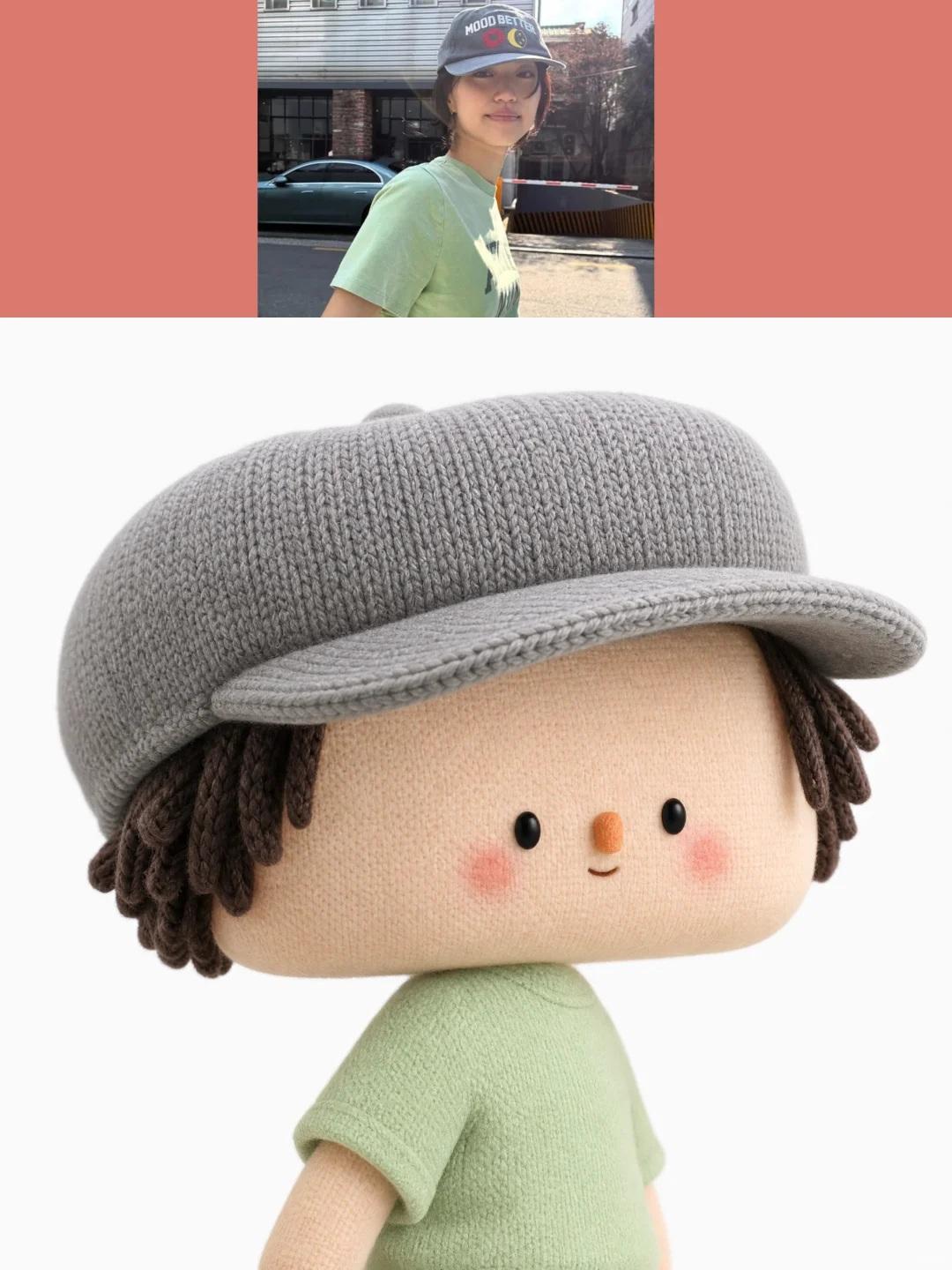
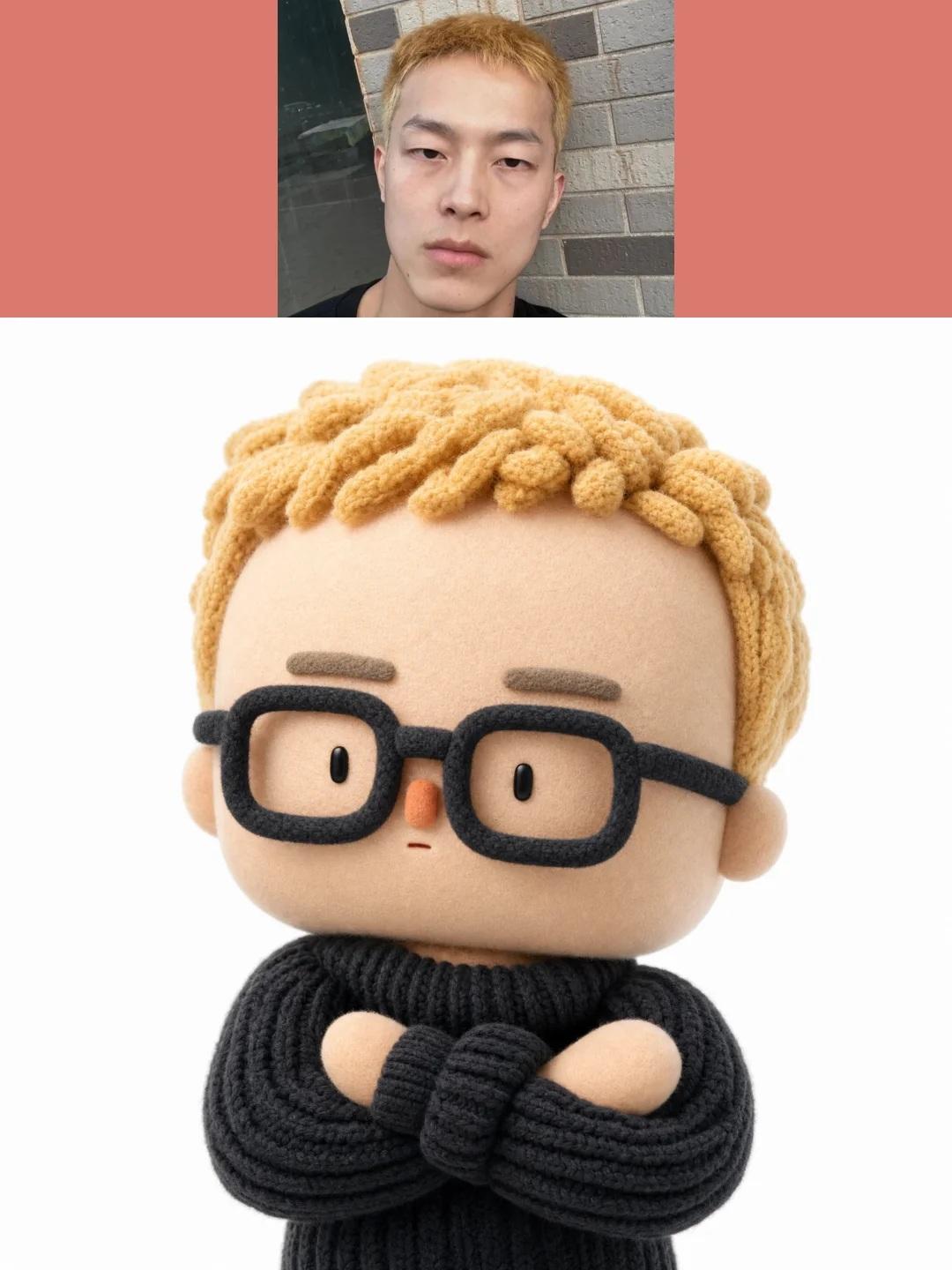
提示词
English
Task: Create a 1:1 Square 3D Textile Art Toy Bust from the Attached Real Photograph

Use the attached real photograph to create a square 1:1, stylized 3D textile art toy bust. Interpret the inputs by their roles: the real photograph is the source of identity and content, while the minimalist white-background toy image is the style reference. Their order does not matter.

Preserve the subject’s identity, facial expression, pose, and spatial relationships between objects. Reconstruct the subject as an exaggerated, humorous designer collectible toy. Do not apply a simple fuzzy or plush filter to the original photograph.

## 1. Style Reference

Borrow only these visual characteristics from the reference image:

- An oversized, horizontally broad head with rounded corners.
- Extremely small, centrally concentrated facial features with generous facial negative space.
- Sculptural knitted forms, clustered yarn shapes, and soft textile construction.
- Subtle asymmetry for a handmade, designer-toy appearance.
- Contrast between fine-grained flocked surfaces and chunky knitted textures.
- A deliberate primary and accent color hierarchy.
- Clean, minimalist white studio photography.

Do not inherit the reference character’s body, pose, hairstyle, hat, glasses, clothing, props, or colors.

## 2. Subject and Identity Preservation

The real photograph is the exclusive source of visible content. Reproduce only the body parts, hairstyle, clothing, accessories, objects, poses, and contact relationships that are actually visible in the original image. Never invent or complete details that extend beyond the photograph.

Identify 2–5 distinctive identity anchors from the source image. Exaggerate 1–2 of them while simplifying the remaining details to maintain recognizability.

- **Head:** Transform it into a broad, thick, rounded rectangular block or a short cylindrical form with softened corners.
- **Eyes:** Use tiny black beads or capsule-shaped forms.
- **Nose:** Reduce it to a small, rounded rectangular block.
- **Mouth:** Preserve the original expression using a short line or a small opening, as appropriate.
- **Hair:** Reconstruct it as large yarn loops, chunky knitted clusters, or sculptural bundles of wool.
- **Hands:** Strictly preserve the number of visible hands. If no hands are visible, add none. If one hand is visible, reproduce only one. Preserve its orientation, sleeve cuff, and contact with the original object.
- **Text and logos:** Convert any visible lettering or branding into illegible woven or knitted texture rather than readable text.

## 3. Composition

Create a compact, close-up head-and-shoulders composition.

- The head should occupy approximately 75–90% of the image width.
- Compress the body into a small supporting form, retaining only the essential visible pose, gestures, and objects.
- Allow elements to be cropped by the image boundaries when necessary.
- Do not add body parts or anatomy extending beyond the original photograph.
- Maintain a clear silhouette and recognizable relationships between the subject and any visible objects.

## 4. Visual Style

**Stylized 3D textile art toy, oversized head, tiny concentrated facial features, sculptural knitted forms, micro-flocked surfaces.**

Prioritize abstract exaggeration over photorealism while preserving recognizability through the subject’s silhouette, hairstyle, facial expression, pose, clothing, and visible objects.

The result should feel like a thoughtfully designed, premium collectible art toy rather than a conventional 3D cartoon character.

## 5. Color Palette

Automatically develop a cohesive palette of 3–5 colors, including:

- A dominant primary color.
- A contrasting accent color with a clear difference in temperature or brightness.
- One or more supporting colors.
- A neutral color for balance.

Non-identity-defining elements may be recolored to improve visual harmony. Preserve the essential identity cues of the original subject while avoiding monotonous palettes, excessive neutrals, evenly distributed rainbow colors, or repetitive mechanical stripes.

## 6. Materials, Texture, and Lighting

Use distinct textile treatments for different surfaces:

- **Face, hands, and small components:** Fine, dense micro-flocked or short-fiber felt surfaces.
- **Hair, hats, and clothing:** Chunky knitting, crochet structures, large yarn loops, and clustered wool forms, applied only where those elements exist in the original photograph.

Create visible material contrast between the fine-grained felt and the coarser knitted structures. The surfaces should appear sculpted from real textile materials, not covered with a generic fuzzy filter.

Use a subtly warm-white seamless background, soft high-key studio lighting, gentle highlights, and short, delicate shadows. Keep the presentation clean, bright, and premium.

## 7. Strict Exclusions

- No photorealistic eyeballs, detailed nostrils, realistic lips, natural skin texture, or individual hair strands.
- No copying the reference character’s identity or distinctive design elements.
- No invented body parts, hand gestures, accessories, clothing, or props absent from the source photograph.
- No conventional 3D cartoon aesthetics.
- No plastic, polymer clay, wax figure, or long-pile plush appearance.
- No readable text, logos, or branding.
- No rooms, environmental scenes, or complex backgrounds.
- No generic fuzzy overlay that obscures the underlying sculptural textile construction.

## Final Priority

**The source photograph determines WHAT is depicted. The style reference determines HOW it is depicted.**

Deliver a polished, humorous, exaggerated 1:1 square 3D textile art toy bust with a distinctive oversized head, tiny facial features, sculptural yarn construction, contrasting textile textures, a deliberate color palette, and clean white studio lighting. Preserve the original subject’s identity and visible content without inventing anything beyond the photographic evidence.
中文
任务:根据附带的真实照片创建1:1方形3D纺织艺术玩具胸像

使用附带的真实照片创建一个方形1:1、风格化的3D纺织艺术玩具胸像。通过角色来解读输入:真实照片是身份和内容的来源,而极简主义白底玩具图像是风格参考。它们的顺序无关紧要。

保留主体的身份、面部表情、姿势以及物体之间的空间关系。将主体重构为夸张、幽默的设计师收藏级玩具。不要对原始照片应用简单的模糊或毛绒滤镜。

## 1. 风格参考

仅从参考图像中借用这些视觉特征:

- 宽大的、水平向宽且带圆角的头部。
- 极小、集中在中央的面部特征,留有大量的面部空白空间。
- 雕塑般的针织形状、成簇的毛线形状和柔软的纺织结构。
- 为了呈现手工制作的设计师玩具外观而采用的微妙不对称。
- 细粒度的植绒表面与粗犷的针织纹理之间的对比。
- 刻意的的主色和点缀色层级。
- 干净、极简的白色影棚摄影。

不要继承参考角色的身体、姿势、发型、帽子、眼镜、服装、道具或颜色。

## 2. 主体与身份保留

真实照片是可见内容的唯一来源。仅复制原始图像中实际可见的身体部位、发型、服装、配饰、物体、姿势和接触关系。永远不要发明或补全超出照片范围的细节。

从源图像中识别2–5个独特的身份锚点。夸张其中的1–2个,同时简化其余细节以保持可识别性。

- 头部:将其转化为宽大、厚实、圆润的长方形块或带有软化边缘的短圆柱体。
- 眼睛:使用微小的黑色珠子或胶囊形状。
- 鼻子:将其简化为一个小而圆润的长方形块。
- 嘴巴:视情况使用短线或小开口保留原始表情。
- 头发:将其重构为大的毛线环、粗犷的针织簇或雕塑般的羊毛束。
- 手:严格保留可见手的数量。如果没有可见的手,则不添加。如果可见一只手,则仅复制一只。保留其方向、袖口以及与原始物体的接触。
- 文本和标志:将任何可见的字母或品牌转化为不可辨认的编织或针织纹理,而非可读文本。

## 3. 构图

创建一个紧凑的、特写的头部和肩膀构图。

- 头部应占据图像宽度的约75–90%。
- 将身体压缩成一个小的支撑形式,仅保留必要的可见姿势、动作和物体。
- 在必要时允许元素被图像边界裁剪。
- 不要添加超出原始照片的身体部位或解剖结构。
- 保持清晰的轮廓以及主体与任何可见物体之间的可识别关系。

## 4. 视觉风格

风格化3D纺织艺术玩具,夸张的头部,极小且集中的面部特征,雕塑般的针织形状,微型植绒表面。

优先考虑抽象夸张而非写实,同时通过主体的轮廓、发型、面部表情、姿势、服装和可见物体来保留可识别性。

结果应该感觉像是一个经过深思熟虑设计的、高端收藏级艺术玩具,而不是传统的3D卡通角色。

## 5. 配色方案

自动开发一个由3–5种颜色组成的协调色板,包括:

- 一种主导色。
- 一种在色温或亮度上有明显差异的对比点缀色。
- 一种或多种辅助色。
- 一种用于平衡的中性色。

可以对非身份定义元素进行重新配色以提高视觉和谐度。保留原始主体的基本身份线索,同时避免单调的色板、过多的中性色、均匀分布的彩虹色或重复的机械条纹。

## 6. 材质、纹理与光照

对不同的表面使用不同的纺织处理:

- 面部、手和小型组件:精细、致密的微型植绒或短纤维毛毡表面。
- 头发、帽子和服装:粗针织、钩针结构、大毛线环和成簇的羊毛形式,仅应用于原始照片中存在这些元素的地方。

在细粒度毛毡和粗糙的针织结构之间创建可见的材料对比。表面应看起来像是用真实的纺织材料雕刻而成的,而不是覆盖了通用的模糊滤镜。

使用微妙的暖白色无缝背景,柔和的高调影棚光照,柔和的高光和简短精致的阴影。保持展示效果干净、明亮且高端。

## 7. 严格排除项

- 无写实的眼球、详细的鼻孔、写实的嘴唇、自然的皮肤纹理或单个发丝。
- 不复制参考角色的身份或独特的设计元素。
- 不发明源照片中不存在的身体部位、手势、配饰、服装或道具。
- 无传统的3D卡通美学。
- 无塑料、聚合物粘土、蜡像或长毛绒外观。
- 无可读文本、标志或品牌。
- 无房间、环境场景或复杂的背景。
- 无遮挡底层雕塑纺织结构的通用模糊覆盖层。

## 最终优先级

源照片决定“画什么”。风格参考决定“怎么画”。

交付一个打磨过的、幽默的、夸张的1:1方形3D纺织艺术玩具胸像,具有独特的夸张头部、微小的面部特征、雕塑般的毛线结构、对比鲜明的纺织纹理、刻意的配色方案和干净的白色影棚光照。在不发明任何超出摄影证据的内容的情况下,保留原始主体的身份和可见内容。